


GA-Y106 Infant Bottle Safety Retention Tester

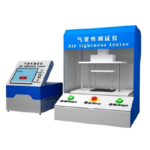
The purpose of the safety retention test is to verify the safety of feeding bottle components (including the nipple or drinking element) during normal use.
- Description
- Inquiry
Description
Description:
The purpose of the safety retention test is to verify the safety of feeding bottle components (including the nipple or drinking element) during normal use. Because feeding bottles are constructed of multiple components, the components (including the nipple or drinking element) should be assembled according to the instructions for the safety retention test.
Standards:
GB38995—2020
GB/T 131—2006 Geometrical Product Specifications (GPS)—Representation of Surface Structure in Technical Product Documents
GB/T 2828.1 Inspection Procedures by Attributes Sampling
GB/T 2918 Plastics—Standard Environment for Conditioning and Testing of Specimens
GB/T 4545 Glass Bottles and Containers—Test Method for Internal Stress
GB/T 4547 Glass Containers—Test Method for Thermal Shock Resistance and Thermal Shock Durability
GB/T 6552 Glass Bottles and Containers—Test Method for Mechanical Impact Resistance
GB/T 6579 Laboratory Glassware—Test Method for Thermal Shock and Thermal Shock Strength
GB/T 6582 Glass—Test Method and Classification for Water Resistance at 98°C
GB 6675.2—2014 Safety of Toys—Part 2: Mechanical and Physical Properties
GB/T 6682 Specification and Test Method for Water for Analytical Laboratories
GB/T 9286 Paints and Varnishes Cross-cut test of paint film
Operation:
Assemble the specimen correctly according to the product instructions and install the locking ring with a torque of (1.75±0.25) N·m. Secure the specimen so that the axis of the bottle body forms a 45° angle with the main axis. Use a suitable fixture to clamp the test element at a position (10±2) mm from the top.
Apply a tensile force of (5±2) N at a 45° angle to the specimen axis and inspect the specimen. Then, while maintaining the same direction, increase the tensile force to (60±5) N at a rate of (200±5) mm/min and maintain it for (10±0.5) s. Visually inspect the specimen.
During testing, the fixture should securely hold the specimen securely to prevent damage to the specimen gripping area, which could affect the test results. If such damage occurs, the test results will be invalid.


