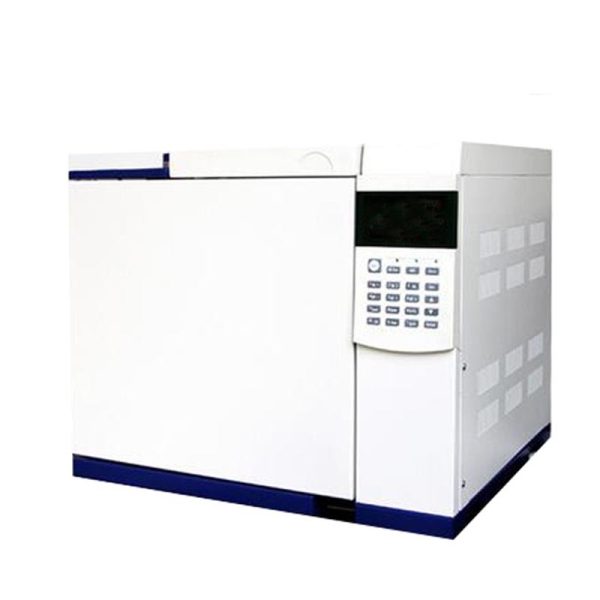
GA-F207 Fully automatic free calcium oxide analyzer


Model:GA-F207
- Description
- Inquiry
Description
GA-F207 Fully automatic free calcium oxide analyzer
I. Product Introduction
This fully automatic free calcium oxide analyzer was developed and manufactured by our company in accordance with GB/T 176-2017, “Cement Chemical Analysis Methods – Determination of Free Calcium Oxide – Ethylene Glycol Method.” This device is primarily used to measure the free calcium oxide content in clinker and cement.
GA-F207 Fully automatic free calcium oxide analyzer
II. Working Principle
The free calcium oxide in the sample reacts with an ethylene glycol-anhydrous ethanol solution under heating to form a weakly alkaline calcium glycolate, which causes the phenolphthalein indicator to turn purple-red. The TSWL-YL100 fully automatic free calcium oxide analyzer automatically controls the heating temperature and time to convert all free calcium oxide into calcium glycolate. During the subsequent titration process, the instrument uses a color sensor to observe the solution color and titrates the test solution with a standard benzoic acid anhydrous ethanol solution until the red color disappears. The free calcium oxide content in the sample can be calculated based on the volume of benzoic acid anhydrous ethanol solution consumed until the red color disappears, the sample mass, and the titrant.
GA-F207 Fully automatic free calcium oxide analyzer
III. Main Technical Parameters
1. Measurement Range: 0-10% (f-CaO Content)
2. Analysis Time: 10 min
3. Sample Size: 0.5 g
4. Repeatability Limit: 0.14% when f-CaO ≤ 2%
0.19% when f-CaO > 2%
5. Temperature Range: 30-100°C
6. Number of Samples: Two
7. Control Method: Touchscreen
8. Power: 1 kW
9. Power Supply: 220V 50Hz
GA-F207 Fully automatic free calcium oxide analyzer
IV. Environmental Requirements
1. Ambient Temperature: 10°C-30°C, Relative Humidity ≤ 85%
2. No strong vibration, dust, strong electromagnetic interference, or corrosive gases.
3. The laboratory room temperature should be kept as constant as possible.
4. The room should be free of strong air convection, strong heat sources, fans, etc.
5. Avoid sunlight. The instrument should be placed in a place not exposed to direct sunlight.