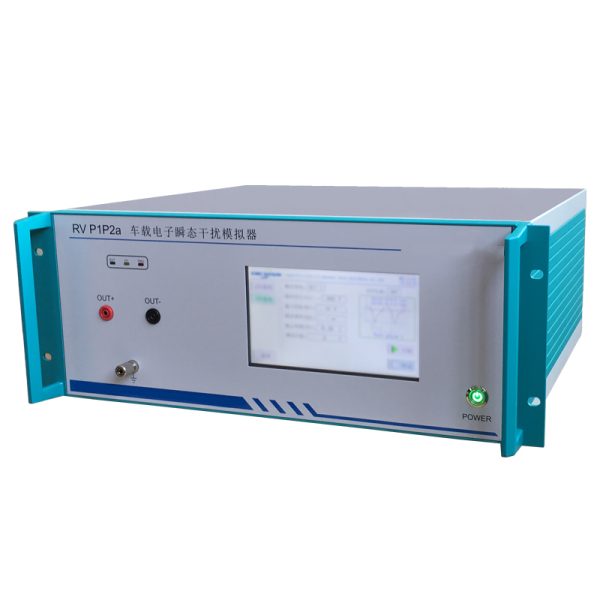


RV-P1P2a Electronic Interference Simulator


- Descripción
- Consulta
Descripción
RV-P1P2a Electronic Interference Simulator
Descripción del Producto
Cars have become the most important transportation nowadays and the safety of each vehicle is the most important. El
electromagnetic disturbance caused by the normal operation of the vehicle will lead to the reduction of the functions, short-termfailures and even permanent damage of various on-board electronic products through conductive coupling. The on-board electronic transient interference simulation test system meets the requirements of the new and old standards of ISO 7637-2 y ISO 16750-2, which is the best choice for anti-interference testing of all kinds of vehicle electronic products.
Road vehicle electronic transient interference simulator RV P1P2a, also called micro-pulse simulator. P1 is a transient phenomenon when the power supply is disconnected from the inductive load. It is suitable for the use of various DUT on the vehicle. The case of maintaining a direct parallel connection with the inductive load is a transient phenomenon caused by the sudden interruption of the current in the device connected with the DUT due to the inductance of the wire harness. Vehicle electronic transient interference simulator RV P1P2a fully meets the latest requirements of ISO 7637-2.
RV-P1P2a Electronic Interference Simulator
Características & Datos técnicos
* Meet the standard of ISO 7637-2 y ISO 16750-2
* Pantalla táctil de 7” fácil de usar
* Soporta varios idiomas & facilitar a los usuarios
* Programa de autoprueba del entorno integrado
* Operación programable
* Built-in high power digital DC source
* RS232/ USB interface, Operación de control de PC
RV-P1P2a Electronic Interference Simulator
Parámetro
|
Modelo
|
RV P1P2a
|
||
|
Forma de onda
|
P1(12V)
|
P1(24V)
|
P2a
|
|
EUT capacity
|
20A
|
||
|
Output pulse voltage (Us)
|
0~ -660V
|
0~+660V
|
|
|
Impedancia de entrada (Ri)
|
2 Oh ,4 Oh 10 Oh ,30 Oh ,50 Oh
|
||
|
Hora de levantarse (Tr)
|
0.5~1μs (10 Oh)
|
1.5~3μs (50Oh)
|
0.5~1μs (2Oh)
|
|
Pulse width (Td)
|
50μs, 200μs, 300μs, 500μs, 1 EM, 2 EM
|
||
|
Pulse period (t1)
|
0.5~99,99s
|
0.2~99,99s
|
|
|
Contar
|
1-9999
|
||
|
Modo de salida
|
Internal coupling decoupling network
|
||
|
Fuente de alimentación
|
CA 220 V ± 10% 50/60Hz
|
||
|
Temperatura ambiente
|
15 ℃ -35 ℃
|
||