
A Comprehensive Guide to ISO 3782: Test Specification for Printing Surface Pick Resistance of Paper and Board
In the printing, packaging and papermaking industries, paper surface strength is a core indicator that determines finished printing quality and prevents common defects such as surface picking, layer delamination and paper peeling. During printing processes, paper is subjected to dual forces of ink adhesion and mechanical tension. Insufficient surface strength directly causes incomplete graphics and texts, dirty printing surfaces and increased product reject rates. As a globally recognized international standard for testing the pick resistance of paper and board, 国际标准化组织 3782:1980 provides unified and reproducible surface strength detection methods for papermaking and printing enterprises worldwide, serving as a fundamental specification for evaluating paper printability. This article comprehensively elaborates on the core definition, testing principles, operational specifications and industrial application values of this standard.
1. Standard Overview
The full name of ISO 3782:1980 is Paper and board — Determination of resistance to picking — Accelerating speed method using the IGT tester (Pendulum or spring model). Developed and issued by ISO/TC 6/SC 2, the technical committee for paper and board under the International Organization for Standardization, it is a classic international standard for printability testing of paper products.
This standard is dedicated to quantifying the printing surface pick resistance of paper and board. Different from static tensile tests, it focuses on the bonding stability of surface fibers, fillers and coatings under dynamic printing conditions, solving industrial problems of inconsistent evaluation criteria and incomparable test data from subjective assessment. 这 1980 version remains valid and acts as a primary reference for formulating national and industrial standards for paper surface strength testing across the globe.
2. Scope of Application
国际标准化组织 3782:1980 is specially tailored for mainstream printing paper materials and commercial printing working conditions, with specific applicable scope as follows:
•Applicable Materials: Common printing paper and board including cultural paper, coated paper, white cardboard and solid cardboard, covering both uncoated plain paper and finely processed coated paper.
•Applicable Printing Processes: Primarily applicable to offset lithography and relief printing, serving as the core testing basis for book printing, packaging color printing and commercial graphic printing.
•Core Testing Scenarios: Simulates the dynamic stress of ink transfer and roller pressing during printing, detects the critical resistance of paper surface to fuzzing, dusting, peeling and delamination, and evaluates the high-speed printing adaptability of paper.
The core advantage of this standard lies in its high consistency with actual dynamic printing conditions. Unlike static tensile tests, its test data can directly guide practical printing production and effectively avoid mass printing defects.
3. Core Testing Principle
国际标准化组织 3782 adopts the constant-force accelerating dynamic test method, which simulates the ink-induced adhesive peeling force on paper surfaces during high-speed printing with highly practical and industry-aligned logic.
In the test, an IGT printability tester is used under constant standard pressure and standard test ink conditions. The printing disc rubs and presses the paper specimen at a continuously accelerating speed. As the test speed increases gradually, the peeling tension exerted by ink on the paper surface rises continuously. When the tension exceeds the bonding strength of surface fibers and coatings, defects such as surface fuzzing, dusting, local peeling and coating detachment will occur on the paper surface.
The standard defines the critical test speed at the first occurrence of surface picking defects as the core evaluation index. A higher critical speed indicates stronger surface pick resistance and better printability; a lower value implies insufficient surface strength and higher risks of quality defects in high-speed printing. Eliminating the limitations of traditional static tests, this dynamic acceleration method accurately reproduces the stress characteristics of industrial high-speed printing, ensuring excellent repeatability and comparability of test data.
4. Testing Equipment and Operational Specifications
4.1 Core Testing Equipment
The standard mandates the use of an IGT printability tester, including two compliant models: pendulum-type and spring-type IGT testers. Both models feature equivalent testing principles and data accuracy that fully meet standard detection requirements. Key equipment components include a standard metal printing disc, adjustable pressure loading module, speed control system, standard backing pad and special test ink.
Key equipment parameters are strictly standardized: the sector test module has a radius of 85 mm with an effective test arc length of approximately 150°, and the printing disc has a diameter of 65 mm and a thickness of 10 毫米. The precisely adjustable pressure ensures consistent and controllable test conditions throughout the experiment.
4.2 Standard Test Procedure
国际标准化组织 3782 specifies strict unified regulations for pre-test preparation, specimen conditioning, experimental operation and data judgment. The core procedures are as follows:
•Specimen Preparation: Cut standard specimens randomly from intact, wrinkle-free and stain-free finished paper products. Ensure flat and uniform specimens while avoiding paper edges and joints to eliminate adverse effects of specimen defects on test results.
•Environmental Conditioning: Condition specimens under standard constant temperature and humidity environment to stabilize paper moisture content and fiber toughness, ensuring stable and reliable test data.
•Equipment Calibration: Install matched backing pads (rubber pads for offset and gravure printing, paper pads for relief printing), calibrate test pressure and initial speed, and fill with standard special test ink.
•Dynamic Testing: Fix the specimen on the sector test module, start the equipment, and make the printing disc rub the specimen surface at constant pressure and continuous accelerating speed while observing surface changes in real time.
•Data Recording and Judgment: Accurately record the critical speed at the first occurrence of surface fuzzing, dusting, peeling or delamination. Conduct multiple parallel tests and take the average value as the final test result.
5. Corresponding Domestic Standard System
To meet the standardized production demands of China’s papermaking and printing industry, the national standard GB/T 2679.16-1997 Paper and board — Determination of printing surface strength (pendulum or spring acceleration method) is equivalently adopted from ISO 3782:1980 with fully consistent technical content. It supplements detailed provisions on backing pad selection, specimen sampling and data correction based on domestic production scenarios.
This equivalent standard realizes mutual compatibility between domestic and international test data. It provides a unified basis for domestic paper quality inspection, import and export quality verification, and upstream and downstream supply chain acceptance. As the core domestic standard for paper printability testing, it is widely applied in factory inspection of papermaking enterprises, incoming quality inspection of printing enterprises and compliance testing of third-party inspection institutions.
6. Industrial Application Value of the Standard
6.1 Guarantee Printing Quality and Reduce Production Losses
Testing in accordance with ISO 3782 can accurately predict the high-speed printing adaptability of paper, screen out unqualified base paper with insufficient surface strength in advance, and avoid printing defects such as dusting, peeling, missing graphics and dirty layouts. It effectively reduces printing reject rates and invalid waste of ink, paper and labor, thereby improving overall production efficiency.
6.2 Unify Industrial Testing Standards and Standardize the Supply Chain
As a globally unified specification, 国际标准化组织 3782 eliminates industrial chaos caused by inconsistent testing methods and incomparable data across different enterprises and regions. Papermaking enterprises can optimize paper formulation, coating and pressing processes based on the standard to improve product printability. Printing enterprises can formulate incoming inspection thresholds to stabilize raw material quality. Unified standard-based quality docking standardizes the quality system of the entire industrial supply chain.
6.3 Support Import and Export Trade and Quality Certification
Test data compliant with ISO 3782 serves as an important basis for paper import and export inspection and international quality certification. Products meeting this standard can satisfy market access requirements of most countries worldwide, helping domestic papermaking and printing enterprises expand export business and avoid technical trade barriers.
7. Core Characteristics of ISO 3782
Compared with other paper mechanical performance testing standards, 国际标准化组织 3782 features outstanding scenario pertinence and practicality: first,high working condition fitting degree, the dynamic acceleration test accurately simulates high-speed printing stress with highly practical test data; 第二,global universality, unified testing and judgment criteria support international trade and industrial collaboration; third, complete operability, standardized regulations covering equipment, specimens, environment and operation ensure high test repeatability and stability; fourth, wide adaptability, covering mainstream printing paper types and processes for all commercial paper product testing scenarios.
结论
As a core international standard for paper and board printing surface strength testing, 国际标准化组织 3782:1980 acts as a critical technical link connecting papermaking technology and printing applications. In high-end printing, premium packaging and export-oriented paper production, strict compliance with this standard for quality inspection is not only the foundation of stable product quality, but also an essential support for enterprises to realize standardized production, access the global market and enhance core competitiveness. Mastering the core requirements and operational specifications of this standard is a necessary professional competence for practitioners in the papermaking and printing industries to control product quality and optimize production processes.
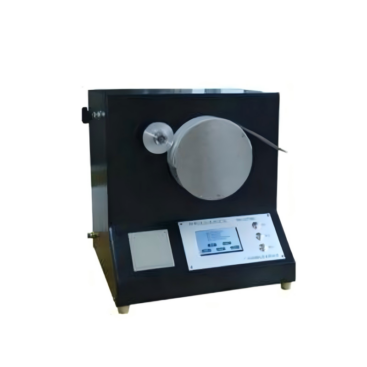
Our product GA-1403 Ink Printability Tester meets this standard.
GA-1403油墨印刷适性测试仪
Test standards:
ISO3782, GB/T2679.15, GB/T22365, QB/T1058, CAPS 514 和 575, SCAN P 63:90.
使用:
This instrument is a universal paper and board printing adaptability tester. It is according to the latest “PAPER printing adaptability” national and international standards, specially developed for paper printing hair test computer control instrument. Its test results are compatible with AIC2-5, IGT A1-3 and IGT A2-3. The instrument adpots advanced electromechanical technology at home and abroad. It is equipped with a high-speed uniform ink equipment, an inker with standard scale, a pulling observation lamp and an aluminum printing plate.
The instrument is suitable for various offset, relief and intaglio printing paper and board simulation printing test. Is the paper testing center, scientific research institutes, universities and related paper enterprises ideal printing hair testing instrument.
产品特点:
• The control system is accurate
• High precision motor and computer program control are adopted to ensure accurate increase of Fan-type pendulum speed, and the error between actual speed and theoretical value is kept within 1% during testing
• Good reproducibility and repeatability
• Automatic, accurate printing pressure and reasonable mechanical design ensure good reproducibility and repeatability of the instrument.
• Easy to use, 易于操作
• Touch screen Chinese display, friendly man-machine interface operation, automatically complete the test.
• Easy to measure and calibrate
• The instrument has a built-in measuring and calibration system, the user or the measuring and calibration department can measure and correct the accuracy of the instrument according to the instructions.
• high speed ink homogenizer is designed for the purpose of homogenizing ink under controllable conditions. It is a kind of ink distribution device with simple operation and stable state.
• high speed ink homogenizer is an ink homogenizer, which can inking up to two printing plates at the same time
Product link:
https://www.gonoava.com/product/ga-1403-ink-printability-tester/
Contact:
电子邮件: [email protected]
WhatsApp: 0086 18670728798(We chat)
If you have any questions you can send me a message or email.