
Interpreting ISO 5626: The Core Standard for Determining Paper Folding Endurance
In the paper industry and paper product application fields, the mechanical properties of paper directly determine its practical value and applicable scenarios. As a key indicator for measuring paper “toughness”, folding endurance is a core part of the paper quality evaluation system. ISO 5626, as the standard for determining paper folding endurance formulated by the International Organization for Standardization (ISO), provides a unified and authoritative technical basis for relevant testing worldwide. This article will comprehensively interpret the technical value and application logic of ISO 5626 from the perspectives of standard positioning, core content, practical application, and domestic-international connections.
TÔI. Standard Foundation: Positioning and Development History
ISO 5626, whose full name is “Paper — Determination of folding endurance”, is a basic testing standard led by the International Organization for Standardization (IX-ISO). Officially released in November 1993, its current version remains ISO 5626:1993. This standard falls under the category of 85.060 (Paper and board) in the International Classification for Standards (ICS) and belongs to Y30 (Comprehensive papermaking) in the China National Standards (CCS) classification. It is an indispensable technical guideline for quality control, product research and development, and international trade in the papermaking industry.
From a technical positioning perspective, ISO 5626, together with ISO 1924-2 (Determination of tensile properties of paper) và ISO 1974 (Determination of tearing resistance of paper), constitutes the “three core standards” for paper mechanical property testing. Its test results are not only an important basis for evaluating the basic strength of paper but also cited by high-end standards such as ISO 9706 (Paper durability) và ISO 11108 (Durability of writing and printing paper), serving as a key reference for measuring the long-term service performance of paper.
II. Core Definition: What is Paper “Folding Endurance”?
In the technical system of ISO 5626, “folding endurance” is defined as the ability of paper to withstand repeated folding without breaking under specific tension conditions. Its core evaluation indicator is the “double fold number” — referring to the number of complete reciprocating processes where the sample is first folded backward and then forward along the same fold line. The cumulative number of double folds when the sample breaks is the folding endurance value of the paper.
Essentially, this indicator reflects the bonding strength, chiều dài, and distribution uniformity of the internal fibers of the paper: paper with strong fiber bonding, longer fiber length, and uniform distribution usually has better folding endurance, capable of withstanding more folding cycles without fiber breakage; on the contrary, paper with short fibers, loose bonding, or high impurity content is prone to premature breakage due to stress concentration during folding. Vì thế, folding endurance is directly related to the actual application scenarios of paper — for example, book paper requires frequent flipping and must have sufficient folding endurance to avoid page damage; packaging paper needs to withstand extrusion and folding during transportation, and insufficient folding endurance will lead to packaging damage.
III. Standard Core: Testing Principles and Technical Requirements
ISO 5626 provides a complete set of technical specifications for paper folding endurance testing, covering the entire process of sample preparation, instrument requirements, test conditions, and result calculation. Its core technical points can be summarized into the following three aspects:
(1). Chuẩn bị mẫu: Ensuring Test Representativeness
The standard puts forward strict requirements for sample preparation to ensure the accuracy and repeatability of test results. Samples should be cut from flat and defect-free paper samples, with a specified width of 15.0mm ± 0.1mm, and the length should match the effective clamping length of the testing instrument. To avoid accidental errors, at least 10 samples should be cut in both the machine direction (MD) and cross direction (CD) of the paper. Additionally, samples should be conditioned for at least 4 hours under the standard atmospheric conditions specified in GB/T 10739 (equivalent to ISO 187) — temperature 23℃ ± 1℃, độ ẩm tương đối 50% ± 2% — to eliminate the impact of environmental temperature and humidity on paper properties.
(2). Instrument Specifications: Four Core Testing Methods
ISO 5626 clearly specifies four applicable testing instruments and corresponding methods, namely the Köhler-Molin method, Lhomargy method, MIT method, and Schopper method. Different methods are suitable for different types of paper samples, with differences in their core technical parameters:
•MIT Method: Equipped with clamps with adjustable spacing, it is suitable for paper and board with a thickness not exceeding 1.25mm. The folding angle is 180° ± 2° (90° ± 2° per side), the standard folding speed is 175 ± 10 cycles per minute, and the spring tension can be adjusted within the range of 0.98N to 14.72N. It is currently the most widely used method;
•Schopper Method: Applicable to paper with a thickness less than 0.25mm and a tensile strength greater than 1.33kN/m, as well as board with a thickness of 0.25mm to 1.4mm. Its testing principle focuses on simulating the folding stress state of paper in natural use;
•Köhler-Molin Method and Lhomargy Method: These are traditional testing methods, still used in some European countries, but less applied domestically due to their relatively complex operation.
Regardless of the method adopted, the standard requires that the folding jaw edge radius of the instrument is 0.38 ± 0,02mm, the jaw width is 19 ± 1mm, and the tension variation caused by rotational eccentricity does not exceed 0.343N, so as to ensure the consistency of testing conditions.
(3). Test Procedure and Result Expression
Trong quá trình kiểm tra, the conditioned sample is fixed in the instrument’s clamps. After applying the specified tension, the instrument is started for reciprocating folding, and the instrument automatically stops counting when the sample breaks. Results are directly expressed by the “number of double folds”. For paper with extremely high folding endurance, the logarithm (base 10) of the number of double folds can also be used for recording. The standard requires that the average value and standard deviation of the results of 10 samples in the same direction should be calculated to reflect the uniformity of paper folding endurance.
IV. Domestic-International Connection: Alignment with China’s National Standard GB/T 457
To meet the development needs of China’s papermaking industry, China has transformed ISO 5626:1993 into the national standard GB/T 457-2008 “Paper and board — Determination of folding endurance” through the method of modified adoption (MOD). This standard was officially implemented on May 1, 2009, replacing the previous three old standards and realizing the unification of domestic testing methods.
GB/T 457-2008 shares the same core technical principles as ISO 5626:1993 but has been adaptively adjusted according to China’s national conditions: first, it eliminates the Köhler-Molin method and Lhomargy method, which are rarely used domestically, retaining only the MIT method and Schopper method; thứ hai, it adds the Schopper tester folding endurance method for board, expanding the applicable scope of the standard; third, it refines the requirements for instrument maintenance and calibration, and adds normative appendices to improve the operability of the standard. This transformation model of “taking international standards as the foundation and optimizing in combination with national conditions” not only ensures that China’s paper test results are in line with international standards but also meets the actual needs of the domestic industry, providing convenience for papermaking enterprises in international trade.
V.. Practical Value: Application Scenarios and Significance of the Standard
The application of ISO 5626 runs through the entire industrial chain of the papermaking industry, playing an irreplaceable role from raw material research and development to end-product quality control. Its core value is reflected in three aspects:
•Product Quality Control: Papermaking enterprises can monitor the fluctuation of paper folding endurance during the production process through the method specified in ISO 5626, and adjust process parameters such as pulping and papermaking in a timely manner — for example, improving paper folding endurance by increasing fiber beating degree and optimizing sizing process to ensure products meet customer requirements;
•Application Scenario Matching: Paper for different purposes has clear requirements for folding endurance. For instance, book printing paper usually needs a folding endurance of several hundred times, while disposable packaging paper can have appropriately lower standards. The test results of ISO 5626 provide a quantitative basis for the classification of paper uses, avoiding “over-qualified paper for low-end applications” hoặc “substandard paper for inappropriate applications”;
•Aging Performance Evaluation: In the research on paper durability, ISO 5626 is often used to determine the change in folding endurance of paper before and after accelerated aging (in high-temperature and high-humidity environments), so as to evaluate the long-term preservation performance of paper and provide technical support for the research and development of special paper such as archival paper and ancient book restoration paper.
Ngoài ra, in international trade, as a universal standard, the test results of ISO 5626 serve as an important basis for both supply and demand sides to reach a quality consensus, which can effectively avoid trade disputes caused by differences in testing methods.
VI. Extension and Development: From Paper to Folding Endurance Testing of Multiple Materials
With the development of the materials industry, the technical principles of ISO 5626 have transcended the traditional papermaking field. Its core testing logic of “reciprocal folding — breakage counting” has been extended to the folding endurance testing of various flexible materials such as copper foil, aluminum foil, FPC circuit boards, and composite insulating materials. Ví dụ, in the electronics industry, the folding endurance of flexible circuit boards directly affects the service life of electronic products. Relevant tests often take ISO 5626 as the basis and adjust testing parameters in combination with the characteristics of electronic materials, forming derived testing specifications.
Although ISO 5626 has not undergone major revisions since its release in 1993, its core technical system still has strong applicability, which benefits from the accurate grasp of the essence of paper mechanical properties when the standard was formulated. In the future, with the intelligent development of testing technology, ISO 5626 may integrate new technical requirements such as automated sample processing and real-time data transmission, further improving testing efficiency and data reliability.
Phần kết luận
As an international benchmark for paper folding endurance testing, ISO 5626 provides a guarantee for the quality unification of the global papermaking industry with its scientific testing principles and rigorous technical specifications. Whether it is production control in papermaking enterprises, impartial evaluation in testing institutions, or quality connection in international trade, this standard plays a core technical supporting role. For domestic practitioners, in-depth understanding of the technical connotation of ISO 5626 and mastering the key points of its alignment with GB/T 457-2008 is not only necessary for improving product quality but also the basis for participating in international competition. With the continuous development of materials science, this classic standard will continue to contribute value to the performance evaluation of materials in multiple fields.
Our Product GA-5027-A MIT Folding Endurance Tester meets this standard.
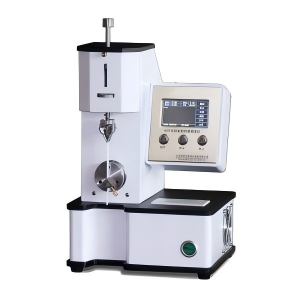
GA-5027-A MIT Folding Endurance Tester
Tiêu chuẩn kiểm tra
ISO 5626, determination of folding resistance of paper
GB 2679.5 determination of folding resistance of paper and board
Giới thiệu
MIT folding tester is used to test the paper folding fatigue performance test tool, through this test instrument can test the paper folding times and folding resistance.The instrument can also be used to test the flexural fatigue performance of textiles, plastic film, wire and other products.It is an ideal testing tool for paper making, bao bì, textile and wire products.
Sự chỉ rõ
Folding Angle: material yield bending Angle is 135±1°
Folding speed: standard bending speed is 175±5 times /min
Spring tension: 4.91~ 14.72N, add 9.81N force, spring compression at least 17mm.
Standard chuck: monomial high width standard clamp with sample parallel bit.
Folding chuck: the change of tension caused by rotation eccentricity is no more than 0.343N.
Folding head width: 19±1mm
Folding radius: 0.38±0.02mm
Clamping method of the lower fixture: cylindrical knurled knob, more convenient force clamping
Fold mouth gap distance: 0.25 mm / 0.5 mm / 0.75 mm / 1.00 mm
Man-machine interface: 5.0in touch color screen control, real-time display of test data
Printout: modular integrated thermal printer
Working environment: nhiệt độ (0~35) oC, humidity < 85%
Overall dimension: 300*300*450mm
Cân nặng: 35 Kilôgam
Product link:
https://www.gonoava.com/product/ga-5027-a-mit-folding-endurance-tester/
Contact:
E-mail: arlenliu@gonoava.com
WhatsApp: 0086 18670728798(We chat)
If you have any questions you can send me a message or email.