
The fluorescence spectrometer Compass4294 is used for the analysis of metal elements in oil
Spectroscopic elemental analysis in lubricants has become a common method, especially when a large number of lubricating oil samples are involved, or when engine wear is critical. For example, such analysis can be used to control the oil quality of aircraft, ships, buses, trains and large automobiles. The extent of wear on engine components can be confirmed by sampling the oil after it has been used for a period of time to monitor the concentration of wear metals.

The fluorescence spectrometer Compass4294 is used for the analysis of metal elements in oil
In the catalytic cracking process of fuel oil and lubricating oil, most of the heavy metals are deposited on the catalyst, causing the catalyst poisoning, which will disrupt the operation of the device and threaten the safety of the device. Naphtha and light diesel Na, Fe, Cu, K, lNi in the catalyst poisoning, sometimes at high temperature to produce refractory mixture, so that mechanical equipment and oil processing pipeline corrosion; Alkali metal and alkaline earth metal elements can accelerate the acid catalyst deactivation. In lubricating oil additives, Ba, Ca, Mg, these alkali earth metals and Zn sulfate, phosphate or organic compounds play a role in cleaning and anti-corrosion in lubricating oil. While Cu, Pb and Sn mainly play the role of anti-oxidation and pressurization anti-wear. Therefore, it is very necessary to detect the element 1 in oil products, which can not only guide enterprises to improve the process, expand production, strengthen the market competitiveness, but also protect the legitimate rights and interests of consumers.
The fluorescence spectrometer Compass4294 is used for the analysis of metal elements in oil
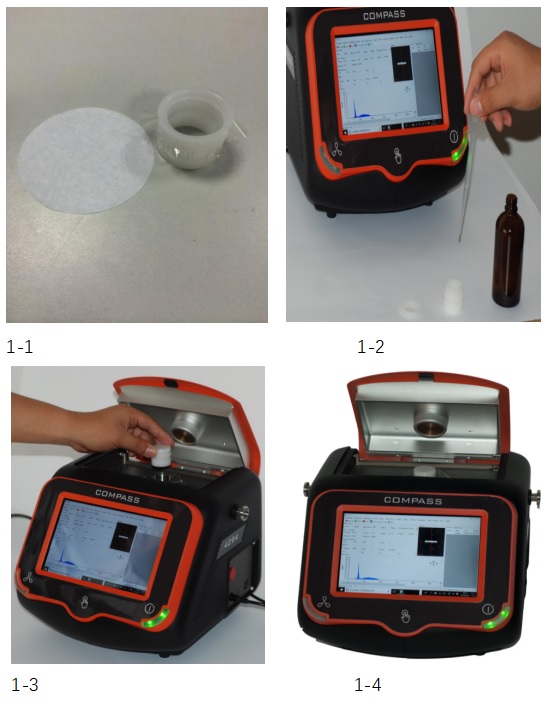
When the sample is irradiated with X-rays, the sample is excited by fluorescent x-rays of various wavelengths, and the mixed X-rays need to be separated by wavelength (or energy), respectively measuring the intensity of X-rays of different wavelengths (or energy) for qualitative and quantitative analysis. The standards are ASTM D4294, ASTMD6481 and GB/T 17040Chemical titration method, colorimetry although simple and easy, but low sensitivity, interference factors, at the same time, there are still a large amount of reagents, serious pollution and other problems, therefore, has been gradually replaced by accurate and rapid XRF instrument analysis.