
- Descrição
- Investigação
Descrição
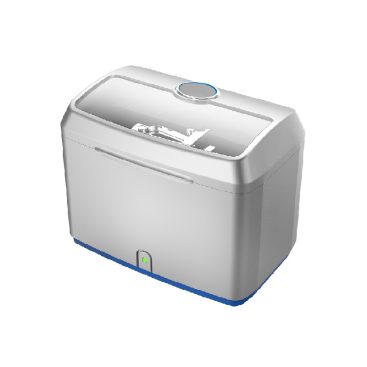
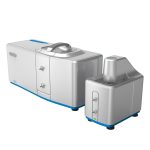
IF4164 Particle Sizing Systems
Resumo
The size of a single particle is called “particle size”, and in some literature or test reports, it is also called “particle size” ou “particle size”, “particle size” e assim por diante. The particle size of an individual particle in a particle group is the basis of particle size distribution. To accurately understand the particle size distribution, we must first understand the particle size. Portanto, many users will also call the particle size meter.
IF4164 Particle Sizing Systems
Scientific research and technological innovation achievements
(1) The abnormal change of Airy spot (ACAD) and its influence on particle size measurement were found, and the interference of ACAD phenomenon on the inversion of light energy data was solved.
(2) Original polarization space filtering technology.
(3) Oblique trapezoidal window technology.
(4) The unified scattered light energy inversion algorithm eliminates the problem that users have to choose inversion modes, and different modes have different results.
(5) Distributed system dual motor drive and continuous monitoring of liquid level.
IF4164 Particle Sizing Systems
Working principle
1. The full-range Mi scattering theory is adopted for laser particle size analysis, which fully considers the refractive index of the dispersion medium and the measured particles, and inverts the particle size and particle size distribution law according to the changes of scattered light intensity of particles with different sizes at various angles.
2. The laser particle size analyzer adopts the original unconstrained fitting inversion method and spectrum amplification technology, which can obtain a more real distribution situation after data processing, which has very important practical value for scientific research customers such as universities and research institutes;
The test of nanoparticles must use the “dynamic light scattering” tecnologia, and the important part of this technology – correlator has been monopolized by foreign countries, nano laser particle size analyzer has taken the lead in breaking the international monopoly of this technology, filling the technical gap for the domestic, can test 1-3500nm size particles.
The laser particle size analyzer adopts wet dispersion technology, which has the advantages of simple operation and intuitive output data. Compared with the traditional instrument, the aging and analysis accuracy are improved. The instrument has shown a good prospect of popularization and application in the Yellow River hydrologic sediment particle analysis, such as the Yellow River water and sediment transfer experiment, the Xiaobei Main Stream silting experiment, and the Xiaolangdi Reservoir weight current test, and has played a great role.
IF4164 Particle Sizing Systems
Parâmetro
| princípio de medição | difração a laser |
| optical model | Full range Mistral theory and Fraunhofer theory are optional |
| faixa de tamanho de partícula | 0.02μm-2200μeu, não há necessidade de substituir a lente, does not rely on standard sample calibration |
| sistema de detecção | Contains a grille type large Angle, non-uniform cross area compensation detector array, the whole measurement Angle range without blind area |
| fonte de luz | 638laser de estado sólido nm com sistema termostático integrado, até 20mW |
| Spatial filtering mode | Non-pinhole polarization filtering technology |
| Sistema de alinhamento óptico | Inteligente totalmente automático |
| measuring time | Typical values are less than 10 segundos |
| velocidade de medição | Até 20,000 vezes por segundo |
| grau de precisão | Dv50 better than ±0.6% (Padrão de látex rastreável pelo NIST) |
| repetibilidade | Dv50 melhor que ±0,5% (Padrão de látex rastreável pelo NIST) |
| segurança a laser | Aula 1 produtos a laser |
| configuração do computador | Processador Intel i5, 4GB RAM, 250Disco rígido GB, rato, keyboard and widescreen display |
| interface de computador | USB2.0 ou superior |
| Plataforma de execução de software | Windows7 ou superior Edição Profissional |
| operating ambient temperature | 5ºC-40ºC |
| Umidade ambiente operacional | 10%-85% humidade relativa (sem condensação) |
| exigência de energia | CA 220V, 50Hz-60Hz, Terreno Padrão |
| Peso do sistema óptico | 31kg |
| Tamanho do sistema óptico | 670mm x 275mm x 320mm |