


TKL Ceramic Tile Crack Resistance Tester

- Description
- Inquiry
Description
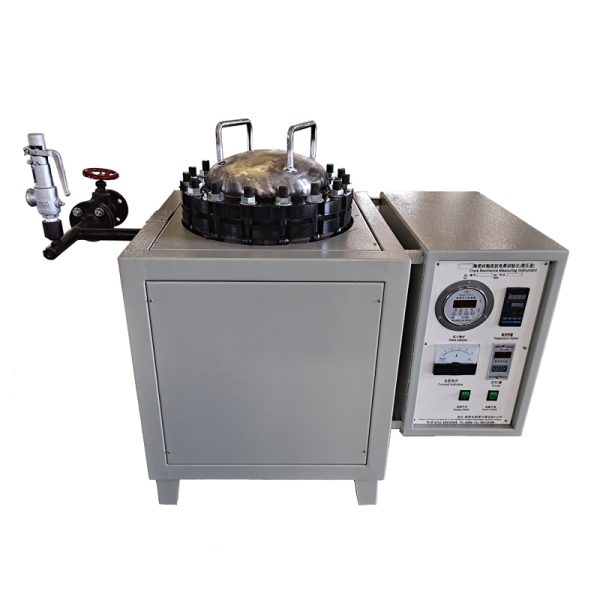
TKL Ceramic Tile Crack Resistance Tester
Introduction
The instrument uses the principle of electric heater heating water to produce steam design, its performance in line with the national standard GB/T3810.11-2016 and ISO10545-11: 1994 “Ceramic tile enamel anti-cracking test method” requirements for test equipment, suitable for ceramic tile anti-cracking test, but also suitable for working pressure of 0-1.0MPa other pressure tests.
Structural characteristics
The equipment is mainly composed of pressure tank, electric contact pressure gauge, safety valve, electric heater, electric control device and other components. It has the characteristics of compact structure, light weight, high pressure control precision, easy operation and reliable operation.
Main technical parameters
| Specific index | TKL-260 | TKL-300 | TKL-500 |
| Container volume | Ф 260 x 300 mm | Ф 300 x 300 mm | Ф 500 x 500 mm |
| Work rate | 4KW | 4KW | 9KW |
| Electric voltage | 220V | 220V | 380V |
| Overall dimension | 800×600×700mm | 800×600×700mm | 1450*800*1500mm |
| Rated pressure | 1.0 MPa | ||
| Pressure accuracy | ±20KPа No contact automatic constant pressure, digital set constant pressure time. |
||
Working principle
1. First, open the autoclave top cover and add appropriate water, which is generally filled to the bottom. During continuous experiments, you can add more water to prevent the drying from producing enough pressure. Too much water will affect the pressure rate
2. Install the sample on the sample rack, and then put it in the autoclave, cover the top cover, and screw the sealing nut tightly to prevent air leakage.
3. Turn on the power switch and turn on the power supply, that is, heat the water through the resistance wire at the bottom of the autoclave, and the steam will gradually enter the test area, so that the pressure in the test area of the autoclave will gradually increase to the set pressure of ±20KPa and maintain the appropriate time.
4. Unscrew the pressure relief valve so that the pressure in the autoclave quickly drops to atmospheric pressure.
5, according to the test requirements, let the sample cool in the autoclave for a period of time, unscrew the top nut, open the cover, you can take out the sample.


