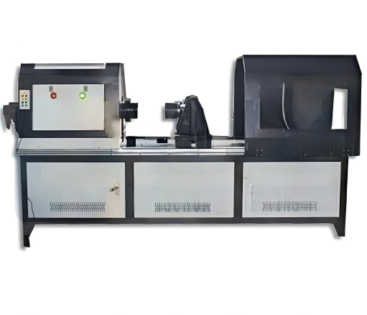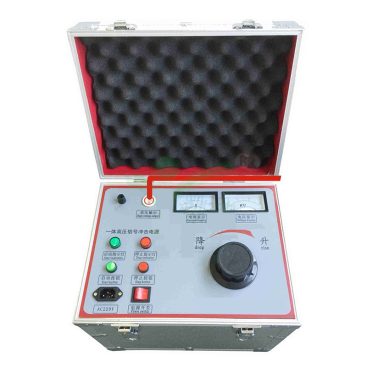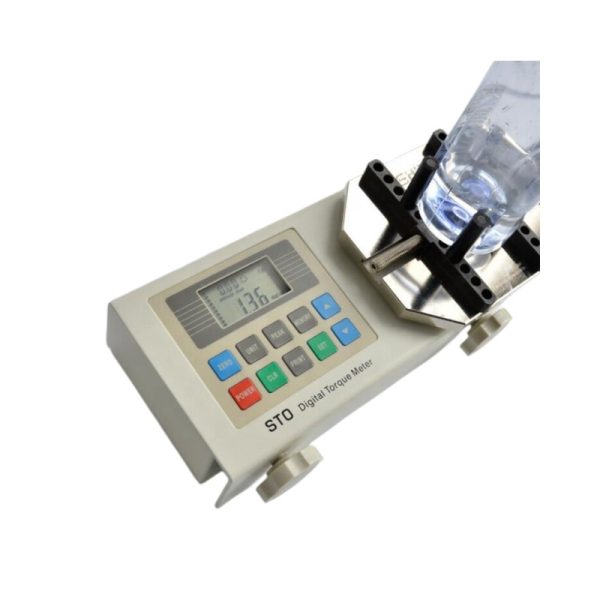
GA-X158 Bolt Joint Torsion Coefficient Testing Machine


The high-strength bolt joint torsion coefficient testing machine is primarily used to test the torsion coefficient and torque-axial force performance of high-strength bolt joints.
- Description
- Inquiry
Description
Product Introduction:
The high-strength bolt joint torsion coefficient testing machine is primarily used to test the torsion coefficient and torque-axial force performance of high-strength bolt joints. It can also automatically measure thread torque, bearing surface torque, yield torque preload, ultimate tightening force and torque, torque coefficient, tightening angle, and other mechanical properties of bolts and studs, such as clamp load and effective torque.
Standards:
GB/T16823.2-1997 “General Rules for Tightening of Threaded Fasteners”
GB/T16823.3-1997 “Threaded Fastener Tightening Methods”
GB/T3098.9-1993 “Fastener Mechanical Properties – Effective Torque Steel Hexagonal Lock Nuts”
ISO16047-2005 “Fasteners – Torque Holding Force Test”
Structural Features:
The main unit adopts a horizontal structure, with the main body constructed as a frame to ensure overall rigidity. The fixture is quenched 40CrNiMoA (HRC 50-55), and the main drive shaft is quenched alloy structural steel to ensure long service life. Different fixtures can be replaced according to the specific specimen. Specimen installation and removal are quick and easy. The main unit’s workbench is equipped with various operating buttons for user convenience.
A load sensor measures the axial load P of the test bolt, while a high-precision non-contact dynamic torque sensor measures the specimen’s torque T. A photoelectric encoder measures the axial displacement (or angular value) of the bolted joint. The computer screen displays the specimen’s torque T, axial load F, and a torque T-axial load F curve. The system can set axial load F or torque T, control system operation and shutdown, and output the following tightening characteristic values:
Bolt torque coefficient K.
Yield tightening axial force Ffy.
Yield tightening torque Tfy.
Ultimate tightening axial force Ffu.
Test Environment:
1. Room temperature between 100°C and 350°C, relative humidity ≤ 80%;
2. On a stable foundation or workbench;
3. In an environment free of vibration and corrosive media;
4. Power supply voltage fluctuations should not exceed ±10% of the rated voltage.
Technical Parameters:
1. Maximum torque: 10,000 Nm; Effective torque range: 2% to 100% F.S; Torque resolution: ±1/300,000 (resolution remains unchanged throughout the test range)
2. Test torque indication error: ±1%
3. Test torque repeatability indication error: ≤1%
4. Maximum axial load: 1,500 kN; Axial force measurement range: 2% to 100% F.S; Resolution: ±1/100,000 (resolution remains unchanged throughout the test range)
5. Test force indication error: ±1%
6. Test force repeatability indication error: ≤1%
7. Effective test space: 600 mm (manually adjustable within a range of 0 to 400 mm)
8. Testing machine spindle center height: ≥100 mm
9. Test torque speed: 0.05 to 10 r/min Any setting;
10. Angle accuracy: ≤ ±0.20;
11. Voltage: AC380V 50Hz; Motor power: ≈15kw