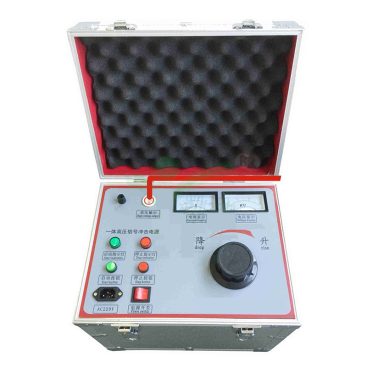
GA-F204 Fully automatic cement setting time tester


Model:GA-F204
- Description
- Inquiry
Description
GA-F204 Fully automatic cement setting time tester
I. Product Introduction
Fully Automatic Cement Setting Time Tester: This instrument is designed based on the national standard “GB/T 1346-2024 Test Method for Water Content, Setting Time, and Soundness of Cement for Standard Consistency,” enabling intelligent, fully automatic measurement of cement setting time. It is primarily used for cement setting time measurement, overcoming the shortcomings of traditional Vicat testers, which are cumbersome, time-consuming, and inaccurate.
GA-F204 Fully automatic cement setting time tester
II. Operating Principle
The fully automatic cement setting time tester is based on the national standard “GB/T 1346-2024 Test Method for Water Content, Setting Time, and Soundness of Cement for Standard Consistency.” Its basic principle is to automatically measure the linear displacement of a probe in cement and then determine and calculate the setting time. Key features of this instrument: Multiple specimens can be maintained simultaneously in the instrument’s constant temperature and humidity curing chamber, allowing for fully automated measurement.
GA-F204 Fully automatic cement setting time tester
III. Main Technical Parameters
1. Linear displacement measurement accuracy: ≤50µm;
2. Initial setting time accuracy: ±15 minutes;
3. Final setting time accuracy: ±30 minutes;
4. Capable of measuring up to 8 specimens simultaneously;
5. Room temperature: 20±1°C
6. Test chamber humidity: ≥90%
7. Total sliding mass: The total mass of the sliding rod and test pin (including the counterweight) is 300g ±1g.
8. Test needle effective length: 70 ± 1mm, diameter: 1.13 ± 0.05mm
9. Test mold: ɸ65 ± 0.5mm × ɸ75 ± 0.5mm × 40 ± 0.2mm
10. Automatic end face measurement, positioning accuracy ≤ 50µm.
GA-F204 Fully automatic cement setting time tester
IV. Environmental Requirements
1. Ambient temperature: 10°C–30°C, relative humidity ≤ 85%
2. No strong vibration, dust, strong electromagnetic interference, or corrosive gases.
3. Maintain a constant temperature in the laboratory as much as possible.
4. Avoid strong air convection, strong heat sources, or fans in the room.
5. Avoid direct sunlight. The instrument should be placed out of direct sunlight.