
Principles of X-ray fluorescence analyzer
When a material is exposed to short-wavelength X-rays, or gamma rays, its constituent atoms may undergo ionization if the atom is exposed to radiation with energy greater than its ionization potential, enough to expel the electrons from the inner orbitals, however this makes the electron structure of the atom unstable to the outer orbitalsThe electrons of the Tao will then backfill into the lower orbital to fill the hole left behind. In the process of backfilling, excess energy is released, and the photon energy is equal to the energy difference between the two orbitals. So, the radiation that the matter emits, this is the energy property of the atom
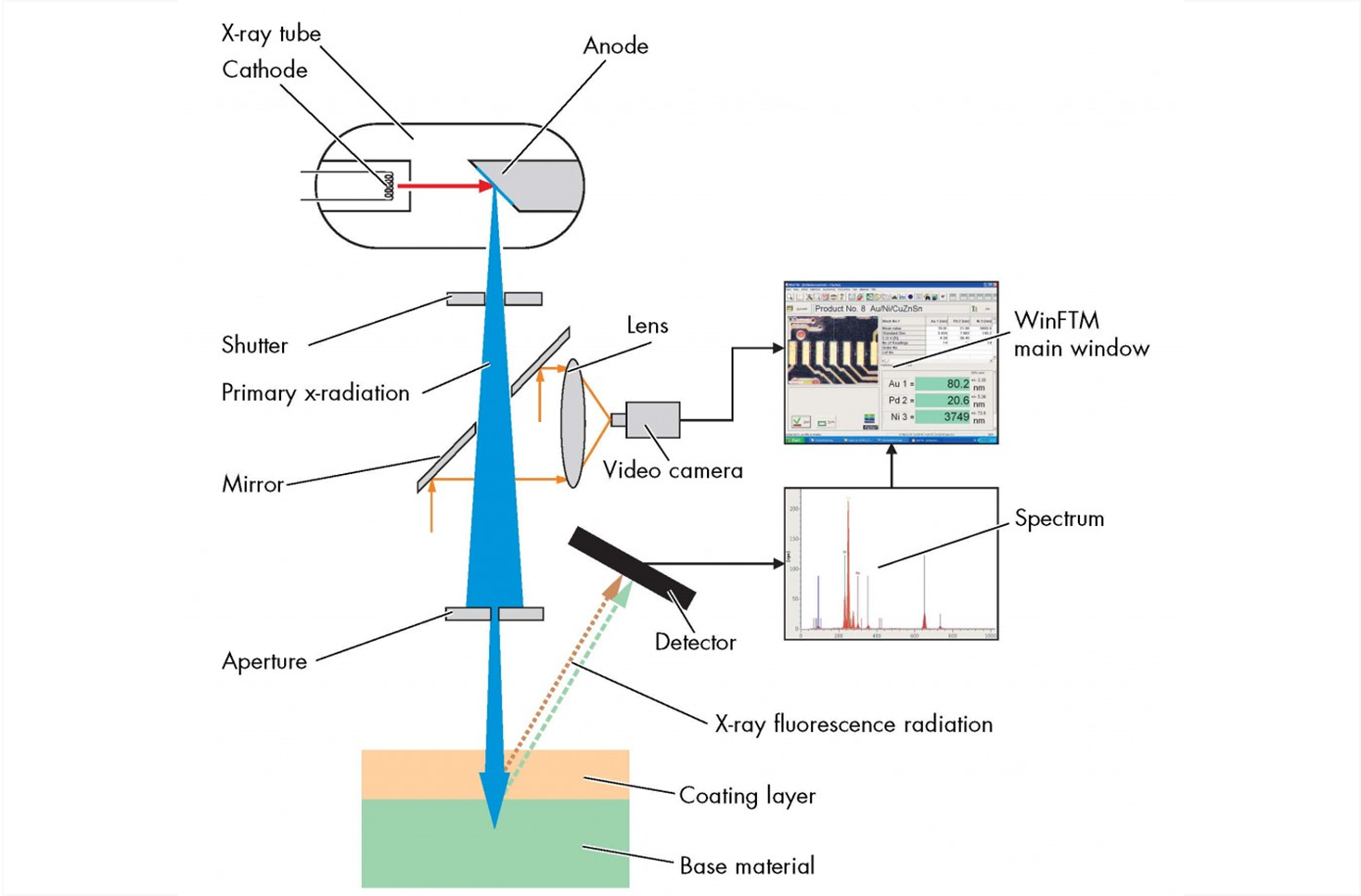

Principles of X-ray fluorescence analyzer
XRF irradiates the sample to be analyzed with X-rays or other excitation sources. After the inner layer electrons of the elements in the sample are knocked out, the transition of the excore electrons is caused. When the excited electrons return to the ground state, the characteristic X-rays will be emitted: different elements will emit their own characteristic XLight, with different energy or wavelength characteristics. A Detector receives these X-rays and a software system converts them to the corresponding signal. thisThis phenomenon is widely used in elemental analysis and chemical analysis, especially in the study of metals, glass, ceramics and building materials,As well as in the fields of geochemical research, forensic science, electronic product Incoming Quality control (EU RoHS) and archaeology, complementing atomic absorption spectrometers to some extent, reducing the analytical manpower input of factory-attached quality control laboratories