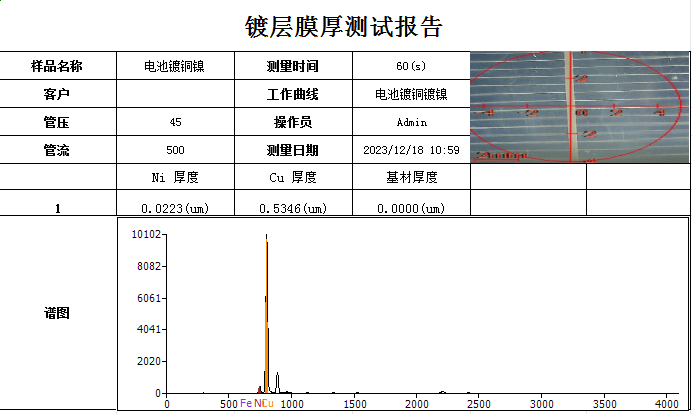
Plating thickness gauge EDX8000T plus determines the thickness of copper and nickel plating on the surface of solar panels
Solar cell, is a direct use of sunlight to generate photoelectric semiconductor sheet, also known as “solar chip” or “photocell “, as long as it is met with a certain illuminance conditions of the illuminance, instant can output voltage and generate current in the case of a loop. In physics, it is called solar photovoltaic, referred to as photovoltaic.
A solar panel is a device that converts solar energy into electricity, and its key component is a solar cell chip. Solar cell chips need to absorb solar energy and convert it into electricity, and the most important thing in this process is the photoelectric conversion efficiency. Therefore, to improve the photoelectric conversion efficiency of solar panels, it is necessary to deal with it, of which coating is an important way.
The coating function of solar panels is as follows:
Plating thickness gauge EDX8000T plus determines the thickness of copper and nickel plating on the surface of solar panels
1. Improve light absorption rate and improve photoelectric conversion efficiency
Solar panel coating can improve the light absorption rate, increase the receiving surface area of the solar panel and effectively use the solar energy, thereby improving the photoelectric conversion efficiency. In terms of light absorption of solar panels, there are two main types of coatings: anti-reflection and anti-reflection. Anti-reflection coating can improve the transmittance of light and improve the light absorption effect; Anti-reflection coating can reduce reflection and improve light absorption rate.
2. Improve the weatherability of the panel
After a period of use, solar panels will be affected by environmental factors, such as acid rain, ultraviolet light, etc. These factors will directly affect the service life of the panels. The use of coating technology can greatly improve the weatherability of solar panels, resist the erosion of various external factors, and extend the service life of the panels.
The EDX8000T Plus coating thickness gauge developed by our is specially designed for the analysis of the composition of the coating material and the measurement of the coating thickness. Its main advantages are accurate, fast, non-destructive, easy to operate and fast measurement speed. Up to five layers of material thickness can be analyzed at the same time, and the material composition of the coating can be quickly identified.
Plating thickness gauge EDX8000T plus determines the thickness of copper and nickel plating on the surface of solar panels
The main application scenarios are as follows:
EDX8000T Plus coating thickness gauge can be used for PCB coating thickness measurement, metal plating coating analysis;
The object of measurement includes coating, coating, lamination, coating, chemical film and so on
It can measure the thickness of various metal coatings such as ion plating, electroplating, evaporation plating, etc
Chrome plating, such as plastic products with decorative chrome plating finishe
Anticorrosive coatings such as zinc on steel
Coatings on circuit boards and flexible PCBS
The contact surface of the plug and electrical contacts
Precious metal plating, such as rhodium material analysis on a gold base
Analysis of functional coatings for the electronics and semiconductor industries
Analyze hard material coatings such as CrN, TIN or TICN
Can be expanded to add RoHS harmful element analysis function, electroplating bath ion concentration analysis
Plating thickness gauge EDX8000T plus determines the thickness of copper and nickel plating on the surface of solar panels
The following is the analysis report of the coating thickness gauge EDX8000T plus to determine the thickness of copper and nickel plating on the surface of solar panels :