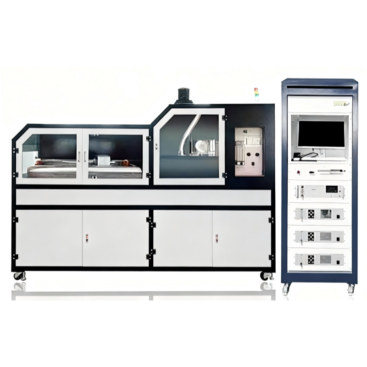
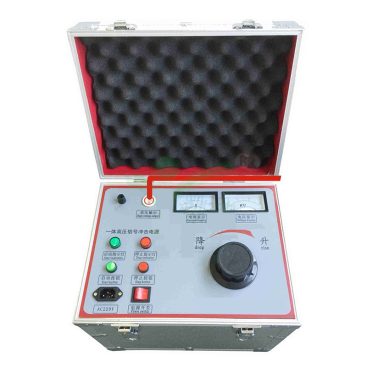
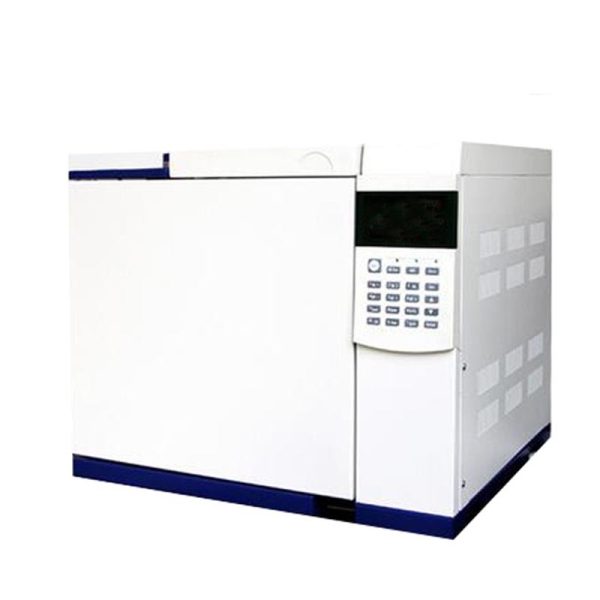
Combustion Toxicity Index (CIT) Meter GA-Y132


Model:GA-Y132
The Combustion Toxicity Index (CIT) tester is suitable for testing the toxicity index of non-metallic materials such as halogen-free, low-smoke, and low-toxicity wires, kable, or optical fibers.
- Opis
- Zapytanie
Opis
I. Scope of Application
The Combustion Toxicity Index (CIT) meter is suitable for toxicity index testing of non-metallic materials in halogen-free, low-smoke, and low-toxic wires, kable, or optical cables. If the presence of nitrogen and sulfur is confirmed, quantitative analysis for SO2, NOX, and HCN should be performed. If the absence of nitrogen and sulfur is confirmed, quantitative analysis for SO2, NOX, and HCN is not required.
II. Standardy
2.1 Complies with Appendix C, “Toxicity Index Test Method,” of GB/T19666-2019, “General Rules for Flame-Retardant and Fire-Resistant Wires, Cables, or Optical Cables.”
2.2 Complies with EN 50305:2020 “Railway installations – Test methods for rolling stock cables with special flame retardancy”;
2.3 Complies with NF X70-100 and NF X70-100-2
2.4 Complies with NF X70-100:2006 “Analysis of combustion test exhaust gases – Część 1: Method for analysis of gases produced by thermal degradation”;
2.5 Complies with NF X70-100-2:2006 “Analysis of combustion test exhaust gases – Część 2: Tubular furnace thermal degradation method”;
2.6 Complies with Annex C of EN 45545-2:2013 “Railway applications – Fire protection of rolling stock – Część 2: Fire performance requirements for materials and components” “Test Method for Determination of Toxic Gases in Railway Products”
III. Main Features:
3.1 Kontrola temperatury: Utilizes Proportional Integral and Derivative Processing (PID) to regulate and control temperature;
2.2 Heating Rate: Utilizes PLC programming to control heating rate;
2.3 The inner furnace surface is coated with a 1750°C high-temperature alumina coating imported from the United States, improving reflectivity, heating efficiency, and instrument life.
2.4 Utilizes Japanese-imported heating resistor wire, inlaid with extended ceramic rings and copper pillars, reducing contact resistance, improving heating efficiency, and extending furnace life.
2.5 Sample Tray: Utilizes a custom-made, calcined quartz boat.
2.6 Electromagnetic sample insertion and removal ensures convenient and safe operation.
IV. Main Parameters
3.1 Tube Furnace: This furnace features a balanced temperature field, low surface temperature, and fast temperature rise and fall rates.
3.1.1 Heating chamber effective length and tube diameter: 600 X 42 mm.
3.1.2 Tube Furnace: Temperatura robocza: (800 ± 10)° C.; czas na test: 40 minuty.
3.1.3 P.I.D. temperature control system employed.
3.1.4 Electrical heating system employed. Heating power: 220V/10kW.
3.1.5 Flow rate adjusted by needle valve: 0.33 m/s.
3.1.6 Źródło powietrza: 160 L/h air compressor.
3.2 Combustion Tube:
3.2.1 Tworzywo: Refractory tube made of silica, resistant to corrosive gases.
3.2.2 Dane techniczne: Inner diameter 40 mm, 60-200 mm protruding from the tubular furnace inlet, 60-100 mm protruding from the outlet, with clearance left for thermal expansion.
3.3 Combustion Boat:
3.3.1 Tworzywo: Fused quartz tube.
3.3.2 Dane techniczne: 100 mm long, 25 mm wide, 10 mm deep.
3.3.3 Combustion Boat Feed Method: Bar magnet and platinum wire pull.
3.4 Gas Collection: Three selection bottles and two gas bags.
3.5 Air Supply System:
3.5.1 Air Flow Meter: 16L to 160L, Adjustable
3.5.2 Kompresor (Company Provided)
3.6 Próbowanie:
3.6.1 Bubbling Device, Quartz Wool, Cooling Pump, Filtr, itp.
3.6.2 Próbowanie: 500mg to 1000mg, equipped with an analytical balance with an accuracy of 1mg
3.7 Release Analysis:
3.7.1 Carbon Oxide Analysis:
3.7.1.1 Infrared Carbon Monoxide (CO) Analyzer, Zakres pomiarowy: 0% Do 10%
3.7.1.2 Infrared Carbon Dioxide (CO2) Analyzer, Zakres pomiarowy: 0% Do 20%
3.7.1.3 Sulfur Dioxide (SO2) Analysis: Volume fraction: 1 x 10⁻⁶ to 2 x 10⁻⁶ or 50 x 10⁻⁶ to 8000 x 10⁻⁶. Connect an appropriate gas detector tube to the gas bag for measurement.
3.7.1.4 Nitrogen and Oxygen Compound Analysis (NOx): Connect an appropriate gas detector tube to the gas bag for measurement. Dokładność (volume ratio):
A) 0.5 x 10⁻¹³ to 10 x 10⁻¹³;
B) 5 x 10⁻¹³ to 100 x 10⁻¹³;
C) 20 x 10⁻¹³ to 500 x 10⁻¹³;
D) 500 x 10⁻¹³ to 5000 x 10⁻¹³
3.7.1.5 Hydrogen Cyanide (HCN) Analyzer: Spectrophotometric titration method, 500 nm wavelength, 10 mm membrane thickness.
3.7.1.6 Reagent: Gas bubbling absorption solution is 0.1 N NaOH.
3.7.1.7 Titration Reagent: 3 g/dm³ picric acid aqueous solution and 50 g/dm³ sodium carbonate aqueous solution.
3.8 Toxicity index (CIT) is automatically calculated by computer.
3.9 Total power supply: AC220V 5kW.
4.0 Uses imported Italian Intec multi-gas analyzer.