
The portable soil heavy metal analyzer Compass200 is used for soil composition testing
X-ray fluorescence analyzer is widely used because it is an important instrument and equipment that can realize the rapid and non-destructive analysis of the material composition in the field. Such as: general prospecting, mineral exploration, mining and metallurgy, environmental protection, material analysis, coating determination, gold detection, building materials, petrokimia, biomedical, archaeological analysis… .. And other fields to be used
X-ray fluorescence analysis is a kind of technology for qualitative and quantitative analysis of multiple elements at the same time, which has the characteristics of rapid and non-destructive analysis of different forms of substances. In the analysis of the composition and element content of the soil, the portable X-ray fluorescence analyzer is used for field testing, collecting analysis results and evaluating the heavy metal pollution of the soil, which has a very significant advantage.
The portable soil heavy metal analyzer is characterized in that the instrument includes an X-ray tube, an X-ray exit window, a detector, a microprocessor computer, a GPS receiver and a power supply device, the X-ray exit window is located on the 1 side of the analyzer, the X-ray tube and the detector are arranged side by side in the analyzer and close to the X-ray exit window, the X-ray tube The tube port and the detector’s detection port are relative to the X-ray exit window, the other end of the 1X ray tube is connected with the power supply device, and the other end of the detector is connected with the microprocessor computer with a multi-channel circuit.
The portable soil heavy metal analyzer is characterized in that the instrument comprises an X-ray tube, an X-ray exit window, a detector, a microprocessor computer, a GPS receiver and a power supply device, the X-ray exit window is located on one side of the analyzer, the X-ray tube and the detector are arranged side by side in the analyzer and are close to the X-ray exit window and the X-ray tube The detection port of the tube and the detector are relative to the X-ray exit window, the other end of the X-ray tube is connected with the power supply device, and the other end of the detector is connected with the microprocessing computer with a multi-channel circuit.
The portable soil heavy metal analyzer Compass200 is used for soil composition testing
Due to the traditional analysis of heavy metals in the soil of the X-ray fluorescence analyzer, such as desktop special X-ray fluorescence spectrometer is composed of the instrument host and commercial PC, and by the external 220V power supply, limiting its mobility; So that 1 with the above traditional X-ray fluorescence analyzer for the analysis of heavy metals in soil, the operation step is to first sample the soil sample, and then bring it back to the laboratory for complex pre-treatment, and finally pass the instrument test,1 collect the energy spectrum data and finally give the composition test results. During the sampling process, it is necessary for personnel to manually record the approximate geographical location and conditions of the test site. When the collected data contains a large number of sample results and geographical location data, the results of the unified calculation will cause the geographical location information is not timely, not detailed and inaccurate due to human error, which leads to the entire test conclusion is not correct, the whole statistical process is also time-consuming and laborious, and the analysis cost is high. Sebaliknya, the test results can not be directly transmitted to the geographic information system software, inconvenient to compare directly on the map, so the visual effect is poor.
Compass200 overcomes the shortcomings that the current laboratory X-ray fluorescence analyzer is not suitable for field testing, and solves the shortcomings that the sampling point position data and measurement results can not be integrated. It provides a portable soil heavy metal analysis instrument with sampling and positioning function, which can not only realize the non-destructive and rapid detection of soil heavy metal content on site, but also can be used for sampling The global positioning system (GPS) geographical coordinate positioning of the sample test site can easily realize the one-time generation of sample composition data and location data, so that the analysis of heavy metals in soil is targeted, systematic and high accuracy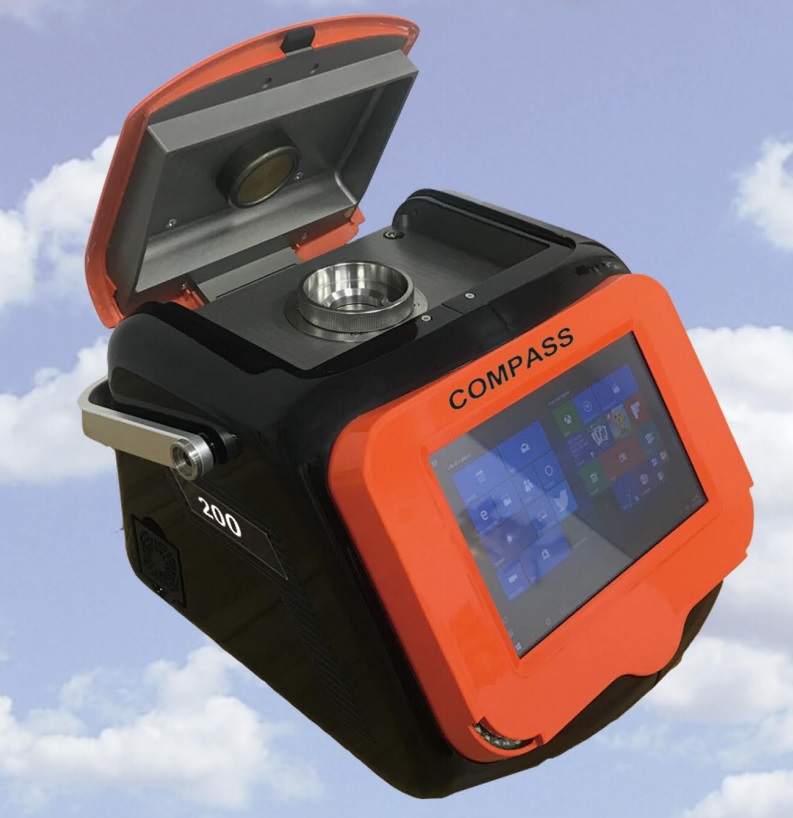

The portable soil heavy metal analyzer Compass200 is used for soil composition testing
The spectrometer Compass200 is the preferred elemental analysis tool for many applications because they are smaller, simpler to design and less costly to operate than other techniques such as inductively coupled plasma emission spectroscopy (ICP-OES) and atomic absorption (AA). Atomic fluorescence (AF) spectroscopy. Some examples of common EDXRF applications are: cement and raw materials: sulfur, iron, calcium, silicon, aluminum, magnesium, dan lain-lain.; Kaolin: titanium, iron, aluminum, silicon, dan lain-lain.; Granular catalysts: paladium, platinum, rhodium, ruthenium, dan lain-lain.; Bijih: tembaga, tin, emas, perak, dan lain-lain.; Cement and mortar fillers: sulfur in ash; Gasoline, diesel and RFG: sulfur, manganese, memimpin, dan lain-lain.; Residual gas oils: sulfur, klorin, vanadium, nikel, dan lain-lain.; Secondary oil: chlorine gas, dan lain-lain.; Kerosene, naphtha: sulfur, dan lain-lain.; Crude oil and Marine fuels: sulfur, vanadium, nikel, dan lain-lain.; Plating, pickling and pretreatment tanks: emas, tembaga, rhodium, platinum, nikel, sulfate, fosfat, chloride, dan lain-lain.; Acetic acid: magnesium, cobalt, and bromine; Terephthalic acid (TPA) : cobalt, manganese, iron, dan lain-lain; Dimethyl terephthalate (DMT): heavy metal; PVC copolymer solution: klorin; Photosensitive emulsion: perak; Clays: metallic and nonmetallic; Waste and sewage streams :RCRA metals, chlorides, phosphates, dan lain-lain.; Food, pet food, and other animal feeds: potassium, phosphorus, and chlorine; Cosmetics: zink, titanium, calcium, manganese, iron, silicon, phosphorus, sulfur, aluminum, sodium; Wood treatment: CCA, Penta, ACQ, ACZA, phosphate-based flame retardants, copper naphthenate, zinc naphthenate, TBTO, IPBC, and combinations of these; Antacids: calcium; And toothpaste: phosphorus and tin.