- 설명
- 문의
설명
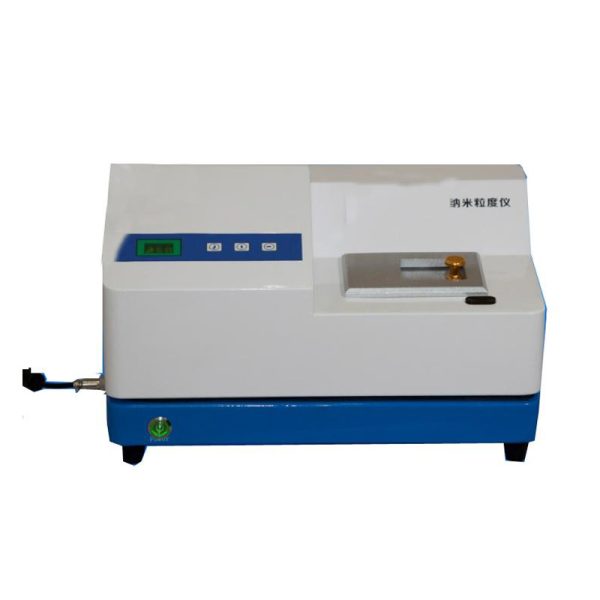
NanolinkS900 Zeta Potential Analyzer
Characteristics:
Zeta potential analyzers are typically produced due to ion dissociation on the particle surface, leaving a net charge surrounded by a cloud of counter-ions near the surface. Various types of ions can diffuse in and out through sliding surfaces that allow the Zeta potential to vary depending on the ionic composition in the liquid, such as pH. Ions can also influence the Zeta potential by participating in chemical reactions within the sliding surface.
The electrostatic potential 1 of particles suspended in a liquid is very close to the surface position. The Zeta potential (ζ) is caused by particle-to-particle interactions in a colloidal system, so it can be used to predict the stability of particle aggregation in a colloidal system. 수치 1 shows particles suspended in a liquid and the various conceptual regions around them. Zeta potential refers to the potential of a sliding or shearing surface in a liquid. In this plane of slip, as the liquid moves freely outside this boundary, it binds to the particle. The net electric potential away from the particle (in the liquid) is zero.
In aqueous media, Zeta potential analyzers are usually produced due to ion dissociation on the particle surface, leaving a net charge surrounded by a cloud of counter-ions near the surface. Various types of ions can diffuse in and out through sliding surfaces that allow the Zeta potential to vary depending on the ionic composition in the liquid, such as pH. Ions can also influence the Zeta potential by participating in chemical reactions within the sliding surface. Sample dilution can significantly change the Zeta potential because ions can adsorb or resolve the particles. 따라서, the Zeta potential can be positive or negative, or zero (isoelectric point, IEP), depending on the pH of the liquid (용제) or the type and concentration of ions.
NanolinkS900 is a new generation of nanoparticle particle size analysis system developed based on many years of scientific research results, which is widely used in the particle characterization of organic and inorganic particles, emulsions, polymers, surfactants, colloids, viral antibodies, protein-like samples. In addition to particle characterization, it can also measure the Zeta potential of colloid.
NanolinkS900 Zeta Potential Analyzer
매개변수
| 측정 원리 | 측정 원리 |
| 입자 크기 범위 | 0.3nm-15중m* |
| 정확도 | Better than ±1% (average particle size, NIST-traceable latex standard) |
| 반복성 | Better than ±1% (average particle size, NIST-traceable latex standard) |
| Minimum sample concentration | 0.1mg/ml* |
| Minimum sample size | 3중l* |
| measuring angle | Classic 90 도 |
| 온도 조절 범위 | 0℃-90℃ (120℃match) |
| Temperature control accuracy | ±0.1℃ |
| condensation control | Dry gas purge |
| laser | 532nm solid-state laser, maximum power 50mW, laser output automatically adjustable |
| Laser safety class | 수업 1 |
| correlator | The minimum sampling time is 25ns and the dynamic range is >1011 |
| 탐지기 | High sensitivity APD or PMT |
| 컴퓨터 구성 | 인텔 i5 프로세서, 4GB RAM, 250GB hard disk and display, mouse and keyboard |
| 컴퓨터 인터페이스 | USB 2.0 or above |
| operating system | 윈도우 7 Or above professional version |
| 작동 주변 온도 | 5℃-40℃ |
| 작동 주변 습도 | 10%-85% 상대습도 (결로가 없을 것) |
| 전력 요구 사항 | 교류 220V, 50/60헤르츠, 표준 접지 |
| 무게 | 25킬로그램 |
| 크기 | 578mm x 397mm x 248mm(가로x세로x높이) |
| 메모: * Depends on sample and pool options | |