
Negative-Pressure Bubble-Method Seal Tester
In quality control processes for food, 의약품, personal care products, and electronic components, the integrity of packaging seals directly impacts product performance during storage and transport. Seal failure can lead to various unpredictable consequences for the product. While there are many negative-pressure seal testers on the market that look similar, their hardware configurations vary; therefore, purchasing decisions should not be based solely on appearance or price. Here is an overview of our company’s negative-pressure seal tester—a device that utilizes the bubble method.
What is Negative-Pressure Bubble-Method Seal Testing?
This device is a negative-pressure packaging leak tester that operates in accordance with the GB/T 15171 and ASTM D3078 testing standards. It functions by creating a vacuum inside a sealed chamber to generate a pressure differential between the inside and outside of the sample. It supports two testing methods:
1. Immersion Bubble Observation Method: The sample is submerged in water within the vacuum chamber. A vacuum is drawn to create a pressure differential; if the packaging has a leak, internal gas escapes, creating bubbles in the water. Operators assess the seal integrity based on the behavior of these bubbles.
2. Non-Immersion Expansion-Recovery Method: The sample is placed in the vacuum chamber without coming into contact with water. After the vacuum is drawn, the operator observes the sample’s expansion. Once pressure is restored to atmospheric levels, the sample’s deformation recovery is evaluated. This method is suitable for samples that must not come into contact with water.
Enterprises can flexibly choose between these two modes based on the specific characteristics of their samples.
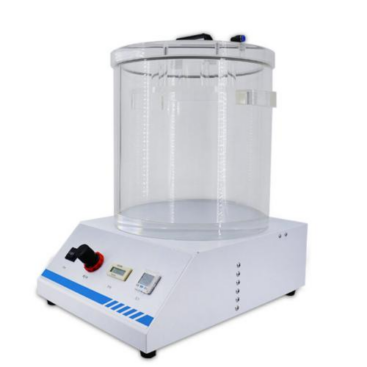
Hardware Configuration of the Negative-Pressure Seal Tester
Designed for flexible packaging seal testing in laboratory environments, the device features the following core hardware components:
| Configuration Items | Key Specifications |
| 제어 모드 | Three-position switch (pressurization / pressure holding / pressure release); three independent electronically controlled valves |
| Pressure Specifications | 범위: 0 에게 -90 kPa; 정확성: ±0.1 kPa; 해결: 0.1 kPa |
| Timing Module | Timer range: 0–9999h 59min 59s; synchronized timing during pressure holding; 자동 재설정 |
| Sealed Chamber | 15mm acrylic chamber; standard size Φ270×210mm (시간); customization available |
| Control Panel | PVC control panel; dual digital displays for pressure and time |
| Chassis Construction | Stainless steel base with high-temperature powder coating |
| Air Supply Requirements | 0.7 MPa (user-supplied); Φ6 polyurethane tubing connection |
| Total Unit Weight | 순중량: 12 킬로그램 |
Comparison with Similar Products on the Market
Many seal testers that appear similar on the surface differ in their configuration of components such as valves, chambers, timing mechanisms, and chassis construction. These differences can lead to issues such as unstable pressure retention, rapid chamber wear, and the need for manual timing records. Below is an objective comparison based on practical application:
Comparison Criteria |
Some similar devices on the market: |
GONOAVA Negative Pressure Seal Tester |
| Control Valve Structure | Single control valve sharing a common circuit; pressure boosting, holding, and release phases interfere with one another, often leading to a drop in holding pressure. | Features three independent electronically controlled valves for separate pressurization, pressure holding, and pressure release circuits; this design minimizes process interference and ensures stable negative pressure within the chamber. |
| Sealing Chamber Wall Thickness | Typically uses 8–10 mm acrylic; prone to cracking after repeated pressurization, resulting in a limited service life. | The chamber wall is 15mm thick, enhancing pressure resistance for long-term, repetitive vacuum testing, while the transparent body allows for clear observation of bubble formation. |
| Timing Function | Lacks built-in timing synchronization; requires an external stopwatch and manual recording, making timing errors likely. | Equipped with a built-in timer that starts automatically when the pressure-holding phase begins and resets upon completion, enabling direct reading of the test duration. |
| Chassis Finishing Process | Standard painted iron housing; prone to oxidation and paint peeling in humid laboratory environments. | Constructed with a stainless steel base and a high-temperature powder-coated finish to resist oxidation and rust, making it suitable for long-term laboratory use. |
| Vacuum Chamber Options | Offers only a single standard chamber size; incompatible with large-sized specimens. | Available in various optional specifications beyond the standard model, with support for custom vacuum chamber sizes to accommodate samples of different dimensions. |
| Pneumatic Components | Uses standard pneumatic components; prone to pressure fluctuations during prolonged testing. | Utilizes pneumatic components from leading manufacturers to minimize pressure fluctuations during the pressure-holding phase. |
Wide range of compatible sample types across industries
Food industry: Suitable for testing various packaging formats, including soft pouches, semi-rigid and rigid packaging, bagged snacks, cans, yogurt containers, and seasoning sachets;
Pharmaceutical packaging: Vials, ampoules, infusion bags, blister packs, and small-headspace powder packaging;
Other industries: Aluminum foil bags, Tyvek packaging, cosmetic packaging, stationery, and electronic component packaging.
In addition to spot-checking finished products, this seal integrity tester can be used to re-examine samples after drop or compression tests, helping enterprises comprehensively evaluate packaging durability.
Tips for use and maintenance
To ensure the seal integrity tester maintains stable performance over the long term, routine maintenance is essential. After testing, clear any accumulated water from the acrylic vacuum chamber and wipe it dry to prevent water stains from lingering; regularly inspect the sealing ring and address any hardening or cracking promptly, as an aged or leaking seal will directly compromise test results.
It is recommended to install a filtration unit at the air supply inlet to minimize the entry of moisture and impurities into the valve assembly. Place the equipment on a well-ventilated, dry surface, away from direct sunlight and humid environments. Non-professionals should not attempt to disassemble the internal valve assembly or electronic control components; contact technical personnel immediately if any abnormalities occur.
이메일: [email protected]
왓츠앱: 0086 18670728798(우리는 채팅합니다)
질문이 있으시면 메시지 나 이메일을 보낼 수 있습니다..