
A Complete Guide to ISO 9237: International Universal Standard for Determining Textile Air Permeability
In the textile field, air permeability is one of the core indicators for measuring product performance, directly related to the wearing comfort of clothing, the functional realization of industrial fabrics, and even the safety protection effect of medical textiles. To address the issues of inconsistent air permeability testing methods and poor result comparability worldwide, the International Organization for Standardization (ISO) has formulated the ISO 9237 기준, providing an authoritative and unified technical specification for the determination of fabric air permeability. This article will comprehensively analyze the core knowledge of ISO 9237 from the dimensions of basic standard information, core technical content, scope of application, practical value, and correlation with related standards.
나. Basic Standards: Positioning and Development History of ISO 9237
ISO 9237, officially titled “Textiles—Determination of the permeability of fabrics to air”, is an international standard developed under the auspices of ISO/TC 38 (Textiles Technical Committee). First released in June 1995, the current valid version is ISO 9237:1995, which was reaffirmed as valid through a review in 2023. As a method-based international standard, its core objective is to standardize the testing process of fabric air permeability, ensuring that different laboratories and enterprises adopt unified technical requirements during the testing process, thereby guaranteeing the accuracy, 반복성, and international comparability of test results.
The formulation of this standard follows the general process of ISO international standards, undergoing in-depth discussions and voting by member states around the world, and requires approval by at least 75% of voting member states before release. This rigorous process ensures the authority and global recognition of the standard. Since its release, ISO 9237 has become the core basis for air permeability testing in the global textile industry, widely used in multiple links such as product quality control, 아르 자형&D innovation, and trade acceptance. It also provides an important reference model for the formulation of relevant national standards in various countries.
II. Core Technical Content: Comprehensive Specifications from Terminology Definitions to Full Testing Process
The technical content of ISO 9237:1995 covers the entire process of air permeability testing, forming a complete specification system that mainly includes key links such as terminology definitions, testing principles, sample processing, equipment requirements, testing procedures, result calculation, and report preparation. The core content is as follows:
1. Core Terminology and Definitions
The standard clearly defines the core definition of “air permeability”: the rate at which air flows vertically through a test specimen under specified test area, pressure difference, and time conditions. This indicator is usually expressed in units of L/(m²·s) (liters per square meter per second) or cm³/(cm²·s) (cubic centimeters per square centimeter per second), with higher values indicating better air permeability of the fabric. 게다가, the standard also clearly defines terms involved in the testing process such as “standard atmosphere”, “pre-conditioning”, 그리고 “test area”, laying a foundation for a unified understanding and operation of the testing process.
2. Testing Principle and Core Logic
ISO 9237 adopts the core principle of “constant pressure and flow measurement”: under a set pressure difference, measure the volume of air passing vertically through a fabric specimen of specified area per unit time, and then calculate the air permeability. The core logic of this principle is to simulate the air flow scenario of fabrics in actual use, using standardized pressure difference and test area as benchmarks to achieve objective quantitative evaluation of the air permeability of different fabrics. 예를 들어, for conventional fabrics, the standard recommends a pressure difference of 100Pa; for high-density fabrics or coated fabrics, higher pressure differences such as 200Pa or 500Pa can be selected according to actual needs to ensure that the test results can truly reflect the actual performance of the fabrics.
3. Sample Processing and Environmental Requirements
The representativeness and state stability of samples directly affect the accuracy of test results. 그러므로, ISO 9237 puts forward strict requirements for sample processing and testing environment:
•Sample Collection: At least 5 specimens should be cut along both the warp and weft directions of the fabric, with a size not less than 200mm×200mm. Defective areas such as seams, flaws, and uneven coatings must be avoided to ensure the representativeness of the samples; if there are special provisions in the product standard, they should be implemented in accordance with the product standard, or the sampling plan should be determined through negotiation between relevant parties.
•Pre-conditioning and Conditioning: Before testing, the specimens should be pre-conditioned and conditioned in a standard atmosphere. The standard atmosphere has a temperature of (20±2)℃ and a relative humidity of (65±5)%. Usually, equilibrium needs to be maintained for more than 24 hours to ensure that the specimens are in a stable moisture absorption state, avoiding deviations in test results caused by changes in fabric pore structure due to fiber swelling from moisture absorption or shrinkage from drying.
4. Testing Equipment and Technical Requirements
The standard puts forward clear requirements for the core components and technical parameters of testing equipment to ensure the reliability and testing accuracy of the equipment:
•Core Equipment: Mainly includes air compressors, flow control devices, pressure measuring instruments, test fixtures, and air permeability calculation and display systems, 즉., special air permeability testers.
•Key Parameters: The test area can be 5cm², 20cm², 50cm², or 100cm² (the standard recommends 20cm² as the conventional test area), and the test area error shall not exceed ±0.5%; the pressure measurement accuracy shall reach ±1Pa, and the flow measurement accuracy shall reach ±2%; the test fixture shall have good sealing performance to ensure that air flows only vertically through the specimen without side leakage. For fixtures with larger test areas, an appropriate specimen support net should also be equipped to avoid deformation of the specimen under the action of air flow.
•Equipment Calibration: The standard requires that all testing equipment be regularly calibrated in accordance with relevant metrological verification regulations. It is usually recommended to calibrate the flow sensor with a standard orifice plate every month to ensure that the equipment is always in a qualified state.
5. Testing Procedures and Result Calculation
ISO 9237 specifies rigorous testing procedures to ensure operational standardization:
•Specimen Clamping: Fix the conditioned specimen flat in the test fixture, ensuring that the specimen is free of wrinkles and stretching, and the fixture is well sealed;
•Parameter Setting: Set the test pressure difference (e.g., 100Pa for conventional fabrics, 200Pa for high-density fabrics) and test area according to the fabric type;
•Start Testing: Start the equipment, and record the air flow per unit time after the air flow stabilizes;
•Repeat Testing: Each specimen should be tested at least 3 times at different positions, and the average value should be taken as the air permeability of the specimen;
•Result Calculation: Calculate the air permeability according to the recorded air flow and test area using the standard formula. 동시에, the coefficient of variation (이력서) 그리고 95% confidence interval of the test results should be calculated to reflect the stability of the test data.
The standard also clearly requires that the test report should detail specimen information, 테스트 조건 (pressure difference, test area, standard atmospheric parameters), test results (평균 가치, coefficient of variation), equipment information, and test date to ensure the traceability of the test process.
III. Scope of Application and Boundaries: Wide Coverage and Clear Definition
ISO 9237 has a wide scope of application and clearly defined boundaries, which is crucial for the correct use of the standard:
Applicable Scenarios: The standard is applicable to most types of textiles, including woven fabrics, knitted fabrics, nonwovens, industrial technical fabrics, and textile products with air permeability (such as curtains, bed sheets, medical protective clothing fabrics, 등.). Both traditional clothing textiles and high-end technical textiles can use this standard for air permeability testing.
Non-Applicable Scenarios: The standard is not applicable to completely air-impermeable textiles (such as fully coated airtight fabrics). Since no air flows through such fabrics, effective data cannot be obtained through the testing method of this standard; at the same time, for some textiles with special structures (such as three-dimensional fabrics, porous foam composite fabrics), if air permeability testing is required, relevant parties need to negotiate and adjust the testing conditions, which should be clearly stated in the test report.
IV. Practical Value: Core Supporting Role Throughout the Textile Industry Chain
As a globally unified air permeability testing standard, ISO 9237 plays an irreplaceable supporting role in multiple links of the textile industry chain. Its practical value is mainly reflected in the following aspects:
1.Guaranteeing Product Quality and Comfort: For clothing textiles (such as sportswear, summer casual wear), air permeability is a key indicator affecting wearing comfort. Enterprises can control product quality through the test results of ISO 9237 to ensure that products meet the designed air permeability requirements; for windbreak jackets, down jackets, 그리고 다른 제품, testing can ensure the balance between air permeability and windproof performance.
2.Supporting R&D and Application of Technical Textiles: In the field of technical textiles, air permeability testing is particularly important. 예를 들어, medical protective clothing fabrics need to have a certain degree of air permeability while ensuring protective performance to improve the wearing comfort of medical staff; automotive filter materials need to optimize the material structure through air permeability testing on the premise of ensuring filtration efficiency, reduce air intake resistance, and improve engine fuel economy. 아르 자형&D personnel can use the test data of ISO 9237 to analyze the impact of fiber type, yarn density, fabric structure, finishing process, and other factors on air permeability, providing a scientific basis for product optimization.
3.Standardizing International Trade Order: In international textile trade, ISO 9237 provides a unified quality judgment benchmark for both supply and demand parties, avoiding trade barriers and quality disputes caused by different testing methods in various countries. By adopting this standard, buyers and sellers can clearly define the air permeability index requirements of products, ensuring the fairness and impartiality of transactions.
4.Promoting Industry Technological Progress: The unified application of the standard promotes technical exchange and cooperation in the global textile industry. Enterprises can carry out technical comparison and innovative competition based on unified test data, driving the improvement of the overall air permeability testing technology and product quality in the industry.
V. Correlation with Related Standards: Connection and Differences Between International and National Standards
As a core international standard, ISO 9237 has close correlations with relevant standards in many countries around the world, and there are also some parallel international standards. Understanding these correlations helps to apply the standard more accurately:
•Domestic Equivalent Standard: The Chinese national standard GB/T 5453-1997 “Textiles—Determination of Fabric Air Permeability” adopts ISO 9237:1995 equivalently, which is completely consistent with the international standard in main technical content. 동시에, it adds some adaptive content combined with the current situation of domestic equipment, such as refining the range of pressure difference selection and supplementing the calculation requirements of the coefficient of variation of results. This standard has replaced the original GB 5453-85 and become the core basis for air permeability testing of textiles in China.
•Other International Parallel Standards: There are many other standards related to air permeability testing around the world, such as ASTM D737 of the American Society for Testing and Materials (ASTM) and JIS L 1096 of the Japanese Industrial Standards (그). These standards have similar core principles to ISO 9237 but differ in details such as test pressure difference, test area, and number of specimens. 예를 들어, the default test pressure difference of ASTM D737 is 125Pa, while the conventional pressure difference of ISO 9237 is 100Pa. In international trade, the adopted standard version should be clearly defined to avoid deviations in test results caused by standard differences.
•Referenced Standards: ISO 9237 also references multiple relevant international standards to ensure the systematicness and scientificity of testing, such as ISO 139 (Textiles—Standard atmospheres for conditioning and testing) ISO 10012-1 (Metrological confirmation systems for measuring equipment). These referenced standards provide supplementary specifications for environmental control and equipment calibration during the testing process.
VI. Common Misunderstandings and Precautions
In the practical application of ISO 9237, the following common misunderstandings should be avoided to ensure the accuracy of test results:
•Misunderstanding 1: Higher air permeability means better product quality. In fact, air permeability should be comprehensively judged in combination with the actual use of the product. 예를 들어, medical protective clothing needs to control air permeability at a low level to ensure protective effect, while sportswear needs higher air permeability to achieve heat dissipation and sweat removal. It is not scientific to judge quality only by the value.
•Misunderstanding 2: Ignoring the impact of the testing environment. Temperature and humidity will affect the moisture absorption state of fibers, thereby changing the fabric pore structure. If the test is not conducted in a standard atmosphere, it will lead to large deviations in test results. 그러므로, the temperature and humidity of the testing environment must be strictly controlled.
•Misunderstanding 3: Ignoring equipment calibration. The accuracy of testing equipment directly affects the accuracy of results. If not calibrated regularly, it may lead to errors in pressure measurement or flow measurement. 그러므로, the equipment must be regularly subjected to metrological verification in accordance with standard requirements.
•Precautions: For coated, laminated, and other composite fabrics, the air permeability of both front and back sides should be tested separately and clearly recorded in the report; for highly elastic or sparse fabrics, the number of test specimens should be increased to avoid distortion of test results caused by uneven local pores.
VII. Conclusion
As an authoritative international standard for determining textile air permeability, ISO 9237:1995 provides a scientific air permeability evaluation tool for the global textile industry by establishing a unified and rigorous testing specification system. Its core value lies not only in ensuring the accuracy and comparability of test results but also in supporting product quality control, promoting R&D innovation, standardizing international trade order, and running through various key links of the textile industry chain. Whether it is textile enterprises, testing institutions, or traders, accurately understanding and applying ISO 9237 can effectively improve product competitiveness and reduce trade risks. In practical application, it is necessary to strictly follow the technical requirements of the standard, reasonably set test parameters in combination with the actual use of the product, and pay attention to the connection between relevant international and national standards to ensure the compliance and scientificity of testing work.
Our product GA-4020 Automatic Fabric Breath Analyzer meets this standard.
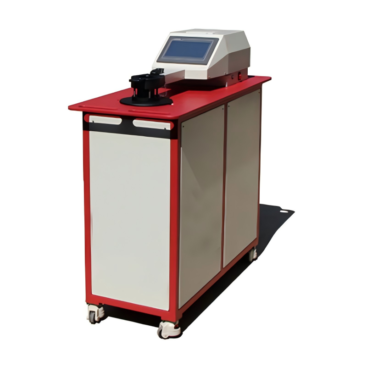
GA-4020 자동 직물 호흡 분석기
테스트 표준 :
GB/T 5453, GB/T 13764, ISO 9237, ISO 7231, ISO 5636, BS 5636, ASTM D737
에서 53887, JIS L1096
적용 범위 :
Used for a variety of textile fabrics, including industrial fabrics, nonwovens and other textile products and other breathable materials.
자동 직물 호흡 분석기
Device characteristics :
1.Use imported high precision pressure and pressure difference sensor to ensure accurate data.
2.Microcomputer processing, the test results are directly displayed without the manual check.3.Built-in 7 test units mm/s, m3/m2. 최소, cm3/cm2. 에스, m3/m2. 시간, CFM, L/dm2. 최소, L/m2. 에스, test units can freely switch according to requirements.
4.Color touch screen control, high definition, Chinese and English double-menu operation.
5.On-line operation of computer upper computer can be used to automatically draw real-time test data curve for easy observation.
6.Automatically change the nozzle and automatically detect the sample area.
기술적인 매개변수 :
1.Differential pressure range: 1 ~ 4000Pa
2.Detectable permeability: 1 ~ 9999mm/s
3.Error of measurement: less than or equal to 2%
4.Measuring fabric thickness: no more than 12mm
5.Adjustment of suction volume: dynamic adjustment of data feedback
6.Test area: 5cm2;20 cm2;50 cm2;100 cm2
Ф 50 mm (19.6 cm2 material) Ф 70 mm (38.5 cm2 material)
7.Nozzle parameters:
|
아니요 |
0 |
1 |
2 |
3 |
4 |
5 |
6 |
7 |
8 |
9 |
10 |
|
Diameter φ(mm) |
0.8 |
1.2 |
2 |
3 |
4 |
6 |
8 |
10 |
12 |
16 |
20 |
8.Data processing capacity: no more than 20*30 시험
9.인쇄기: thermal micro printer
10.전원: AC220V 50Hz 2KW
11.Outer form: 1070 엑스 670 x 1080mm
12.무게: 75킬로그램
Product link:
https://www.gonoava.com/product/ga-4020-automatic-fabric-breath-analyzer/
연락하다:
이메일: arlenliu@gonoava.com
왓츠앱: 0086 18670728798(우리는 채팅합니다)
질문이 있으시면 메시지 나 이메일을 보낼 수 있습니다..