


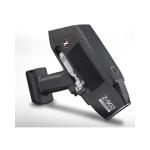
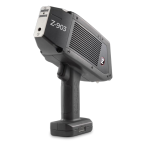
SciAps Z-902C LIBS XRF spectrometer analyzer

- Descrizione
- Inchiesta
Descrizione
LIBS XRF spectrometer analyzer
1.Caratteristica
Lo spettrometro portatile della serie SciAps Z è l'analizzatore portatile al mondo in grado di analizzare il contenuto di carbonio nell'acciaio al carbonio e nell'acciaio inossidabile. Spettroscopia di degradazione indotta da laser (HH-LIBS) viene utilizzato per pulsare laser con una lunghezza d'onda di 1064 nanometri e una frequenza di 50 Hz, con una potenza laser di 5 millijoule per impulso. Spettrometro incorporato, intervallo dello spettro di analisi :190 nm -670 nm. Utilizzare l'argon integrato. Un minimo di 0.008% C può essere rilevato. I vantaggi della serie Z sono i seguenti:
(1) Compatto e leggero
L'analizzatore di librerie SciAps Handheld pesa circa 2 kg, misurare (lunghezza * larghezza * altezza) 273*73*12mm, è attualmente l'unico sul mercato in grado di misurare il contenuto di carbonio dell'acciaio legato al carbonio e di calcolare automaticamente il carbonio equivalente, durante l'identificazione dell'analizzatore di spettro portatile di grado metallico, è uno strumento analitico ideale per l'ispezione sul campo.
(2) Facile da usare e risparmio di manodopera
1. Design simmetrico, aiutare gli utenti a bilanciare lo strumento più facilmente, risparmiare energia.
2. La parte della maniglia è piccola, e il concetto di design aerodinamico che si adatta alla forma della bocca della tigre del palmo fa sì che anche gli utenti di sesso femminile con mani relativamente piccole abbiano un'esperienza molto confortevole quando tengono lo strumento.
3. Il concetto di design quadrato nella parte inferiore consente allo strumento di appoggiarsi facilmente e saldamente sul tavolo, che è facile per l'utente afferrare lo strumento e proteggere le dita dell'utente da eventuali lesioni dovute al campione.
4. Il fondo dello strumento e la coda del corpo principale sono in linea retta. Quando si misurano campioni piccoli, la finestra di test dello strumento può essere rivolta direttamente verso l'alto, e il campione può essere posizionato direttamente nella finestra del test per il test.
(3) Durevole
La finestra di SciAps LIBS è zaffiro, alta resistenza, che impedisce efficacemente che la finestra venga danneggiata da campioni irregolari o taglienti, con conseguenti danni ai componenti di valore all'interno dello strumento.
(4) Sicuro senza radiazioni
Analizzatore di spettro di ripartizione indotta da laser SciAps denominato LIBS, tecnologia laser di campionamento, livello di sicurezza dello strumento 1, puoi tenere direttamente il test del campione a mano, senza preoccuparsi dell'uso della sicurezza; Non è necessario spendere tempo e denaro per richiedere una licenza per strumenti di radiazione e frequentare la formazione annuale e l'audit annuale organizzati dai residenti’ Comitato.
(5) Nessun materiale di consumo vulnerabile e costoso
Rispetto all'XRF, SciAps non ha materiali di consumo vulnerabili e costosi. Non è necessario preoccuparsi degli elevati costi del servizio post-vendita.
(6) L'uso di bombole di gas argon ad alta purezza per proteggere il segnale caratteristico dell'elemento
La protezione con argon determina l'intensità spettrale caratteristica dell'elemento 10 volte più forte di quello dell'aria, che in linea di principio garantisce che le nostre apparecchiature possano analizzare elementi con lunghezze d'onda della luce caratteristiche nella regione dell'ultravioletto ed elementi a basso contenuto.
(7) Test stroke adjustable technology (SciAps patent), with the following analytical advantages:
1. Minimize the impact of uneven sample quality on test results
With a single beam diameter of 50μm, SciAps has developed an analytical technology with adjustable test travel (SciAps patented technology) to minimize the impact of uneven sample quality on test results, with a maximum travel of 16*16 test points.
2. It can analyze ultra-small samples and ultra-thin samples that are not well analyzed by other techniques
The minimum stroke is 1 point, the diameter of a single laser is 50μm, the ablation depth is 10μm, and the theoretical minimum can be measured with a diameter greater than 50μm, a thickness greater than 10μm of small samples and the element composition of the sample coating.
3. Support the drawing of two-dimensional impurity elements respectively, widely used in new material research and development and failure analysis
(8) Leading noise removal technology
Low frequency 50HZ pulse laser combined with detector signal delay acquisition technology, minimize background noise light collection, improve signal purity, combined with high-purity argon to maximize protection of characteristic spectral signals, improve the analysis sensitivity of low content elements; Right photo:
Blu: Spectrum without argon and without delay
Yellow: Argon, spectrum during delayed acquisition
(9) Technology leading analysis, high efficiency and low cost excellent analysis
1. Advanced technology ensures accurate results
SciAps LIBS test technology has been approved by API 578 and ASTM, among others.
2. Faster detection speed greatly improves work efficiency and lower analysis cost
The evaluation report of a well-known multinational testing company shows that the cost of purchasing our equipment in the later stage is about 10% of the cost of the current testing equipment, and the detection speed is improved.
| detection value
|
error value
(%) |
| Ccontent 0.02% | ±0.005% |
| C content 0.2% | ±0.01% |
(10) Funzionamento semplice
1. Android operating system:
All SciAps LIBS instruments run the familiar Android operating system combined with SciAps’ simple and intuitive user interface, making operation of the instruments very simple. Connect to your computer and printer via Bluetooth or wirelessly to share and print test results:
Data export via USB flash drive, Wireless LAN or Bluetooth is simple.
Touch displays are clear, bright and readable in all light conditions.
With standard HD camera; Aim for welds or other small samples.
Simple report production and archiving operations with excellent traceability to the test site.
2. One-button spectrometer drift correction function
The startup calibration procedure is standardized, and the sample can be tested according to the software prompt
3. One-click analysis mode
The analysis software is similar to the analysis software of spark direct reading spectrometer, the interface is simple and easy to operate.
4. Remote operation
Android operating system, optional remote operation application, through the PC or mobile phone control instrument, to help customers timely solve software failures and establish a new analysis model, so that efficient real-time service is possible.
(11) Global connectivity
Connectivity packages provide revolutionary data and report sharing capabilities
Global real-time data sharing
SciAps LIBS runs Android. With real-time synchronization, the analyzer can immediately send each test result to any designated computer with Internet access in the world. For exploration, this means that field analysis data or drilling rig core data can be shared and backed up to headquarters in real time from any remote location. Remote real-time monitoring of test data and test quality has a profound impact on quality control and decision efficiency. Verify proper analyzer operation and calibration checks. No more wasting time manually exporting and downloading data.
Data sharing
Run X or Z on any Bluetooth-enabled tablet or smartphone. Share the results instantly to your phone and send them anywhere by email.
Data printing
Send test data or test reports to the Bluetooth printer via Bluetooth, and export data no longer depends on the data cable.
(12) Configure profile builder to allow customizable databases and analysis models;
(13) The ore analysis model has been developed to support the analysis of powder or solid rock ore samples;
(14) A full-element analysis model was developed to support one-key analysis of all elements in the range of 190 nm-625 nm with characteristic light wavelength in the sample;
(15) Adopt the Android system and support the sharing of real-time test results through the network, Bluetooth and other means.
LIBS XRF spectrometer analyzer
2. Z series analyzer software features
(1) A wide range of analytical elements
Can analyze light elements that cannot be analyzed by other handheld analysis techniques
It can also analyze other elements that are difficult to analyze with handheld analysis techniques.
It can also analyze other elements that can be analyzed by handheld analysis techniques.
(2) Advantages of sample types
Customers can purchase current analysis software for different materials or analysis according to their own analysis purposes, ad esempio:
Aluminum base: Be, Mg, Al, E, Di, V, Cr, Mn, Fe, In, Cu, Zn, Zr, Pb, Bi, Ag, Sn
Titanium base: Al, Di, V, Cr, Fe, Cu, Zr, N.B, Mo, Sn
Low alloy steel: C, Al, E, Di, V, Cr, Mn, Fe, Cu, In, N.B, Mo, Pb
Stainless steel: C, Al, E, Di, V, Cr, Mn, In, Fe, In, Cu, N.B, Mo, W
Nickel base: Al, E, Di, Cr, Mn, Fe, Co, In, Cu, N.B, Mo, W
Copper base: Be, Al, E, Cr, Mn, Fe, In, Cu, Zn, Ag, Sn, Pb, Bi
Cobalt base: Al, E, Di, Cr, Mn, Fe, Co, In, Cu, N.B, Mo, W
Special matrix: Mg, V, Cr, Mn, Co, Zn, Zr, N.B, Mo, Ag, Sn, Hf, Di fronte, W, Re, Pb, Sn.
(3) Support the analysis of samples of various shapes
Supports analysis of samples of various shapes without the need for special fixtures
(4) Analysis of efficiency advantages
The analysis speed is faster than the field carbon measurement technology
(5) Powerful application extension and modeling software ProfileBuilder
(6) Unparalleled compatibility
After the spectral information of SciAps LIBS sample is derived, the spectrum can be solved by other LIBS spectral solution software.
LIBS XRF spectrometer analyzer
3.SciAps Z-902C+ series technical specifications
1. Working conditions:
1.1 Temperatura di esercizio: -10℃ -40 ℃
2. Equipment use:
2.1 Can analyze the content of carbon element and alloy composition in alloy materials, and automatically identify alloy grades.
3. Specifiche tecniche:
1. Misurare: 273*73*12 (mm), weight about 3 kilograms, peso leggero, facile da trasportare,
2. Excitation source: 5-6 mj/ pulse, 50 Hz repetition rate, 1064 nm laser source
3. Spectrum analysis range: multi-CCD spectrometer :190 nm-625 nm.
4. Spectral data acquisition:
Unique Time Gating technology, minimize the interference of background noise to signal, improve test accuracy and precision;
5. Electronic signal processing: ARM Cortex-A9 dual-core / 1.2GHz memory: 1 GB DDR2 memory, 1 GB memory
6. Auto focus: Computer control manual or automatic adjustment of laser focus sample position
7. Alimentazione elettrica: rechargeable lithium battery and charger.
8. Schermo: 2.7″ color touch screen smartphone display -PowerVR SGX540 3D graphics
9. Data storage: 32GB SD
10. Communication – data transmission: Wifi, Bluetooth,USB(transmission function can be turned on or off according to customer requirements).
11. Telecamera: In the analysis process, the on-board camera helps to locate the detection position, and the built-in high-definition camera and video imaging system can carry out accurate micro-area analysis
12. Operating system: Android intelligent operating system
13. Operation/Argon purification: Argon evolution characteristic spectral signal, reduce the absorption of air to characteristic light, maximize the maintenance of characteristic spectral signal strength; Built-in high purity argon environment, built-in screw in the handle of the instrument miniature argon cylinder, user replaceable argon cylinder for operation in an argon purification environment. Argon tank provides about 600 tests before replacement.
14. The laser test stroke can be adjusted according to the size and shape of the sample, the maximum laser test stroke can be set to 16 X 16,256 test points, at least one test point can be set.
15. Alloy composition testing and grade confirmation meet the requirements of the American Petroleum Institute (API) recommended procedure API 578.
16. Allo stesso tempo, it can analyze the content of Li, Be, B and other elements in the alloy and the types and contents of conventional alloy elements
17. A single laser with a diameter of 10um can test the element composition of small samples, ultra-thin samples or sample coatings of mm level;
18. Alloy analysis mode: can analyze conventional aluminum alloy, copper alloy, acciaio inossidabile, nickel alloy, titanium alloy, cobalt alloy, iron alloy samples; Contains more than 500 alloy grades, users can use ProfileBuilder software to add their own alloy grades.
19. Carbon alloy analysis mode: can analyze the carbon element in stainless steel low alloy steel, alloying element content, identify the grade;
20. Carbon equivalent analysis function: The instrument can automatically calculate the carbon equivalent of low alloy steel according to the detected material composition, which helps the field judge weldability and improve work efficiency;
21. Element analysis mode: Qualitative analysis can be done on all kinds of unknown samples including but not limited to alloy ceramics ores and other samples, and the elements that need to be detected can also be added at any time according to customer needs;
22.PB software: allows customers to add their own unique samples to the alloy grade library;
23. Calibration check: Complete automatic calibration and wavelength calibration verification by testing the internal shutter of 316 acciaio inossidabile
24. Drift correction: Only the test with high accuracy requirements needs to run drift correction function. Drift correction is done automatically by testing factory-supplied standard parts
25. Safety: Laser safety level 3B, built-in sample sensing device, no sample test window, no laser excitation, livello di sicurezza dello strumento 1, no ionizing radiation; Password protection to ensure data security and unauthorized personnel operating the instrument.
Standard accessories: waterproof outer case, 2 Li-ion battery, Caricatore, cavo USB, ProfileBuilder software, editable alloy grade library (alloy application), boot self-test sample. Training support, free software upgrades for life.
LIBS XRF spectrometer analyzer
4. Instrument Configuration List List of consumable items
SciApsZ series configuration list
1 Host 1 Piece
2 alloy testing software 1 Impostato
3 operating system 1 Impostato
4 built-in HD camera 1 Piece
5 USB data transmission cable 1 Piece
6 High capacity lithium battery 2 Pieces
7 intelligent charging system 1 Impostato
8 Spare a quartz window 1 Piece
9 waterproof transport plastic box 1 Piece
10 Software backup USB flash drive 1 Impostato
11 instruction manual 1 Impostato
12 small argon tanks and 5 bottles
13 alloy standard samples 3 Sets
14 Portable sander 1 Impostato
15 spare screwdriver 1 Impostato
SciApsZ series consumable list
1. Small argon tank
2. Sanding sheet


