
Helium mass spectrometer leak detector connector leak detection
Connectors are electromechanical components that connect electrical lines and have high requirements for air tightness.
Helium mass spectrometer leak detector is generally used to detect the leakage of the connector by vacuum helium injection method, one end of the workpiece is connected through the leak detector, and the other end is sprayed with helium gas. If there is a leak of helium, it will be detected by the leak detector, and the leak rate will be displayed on the screen in real time.
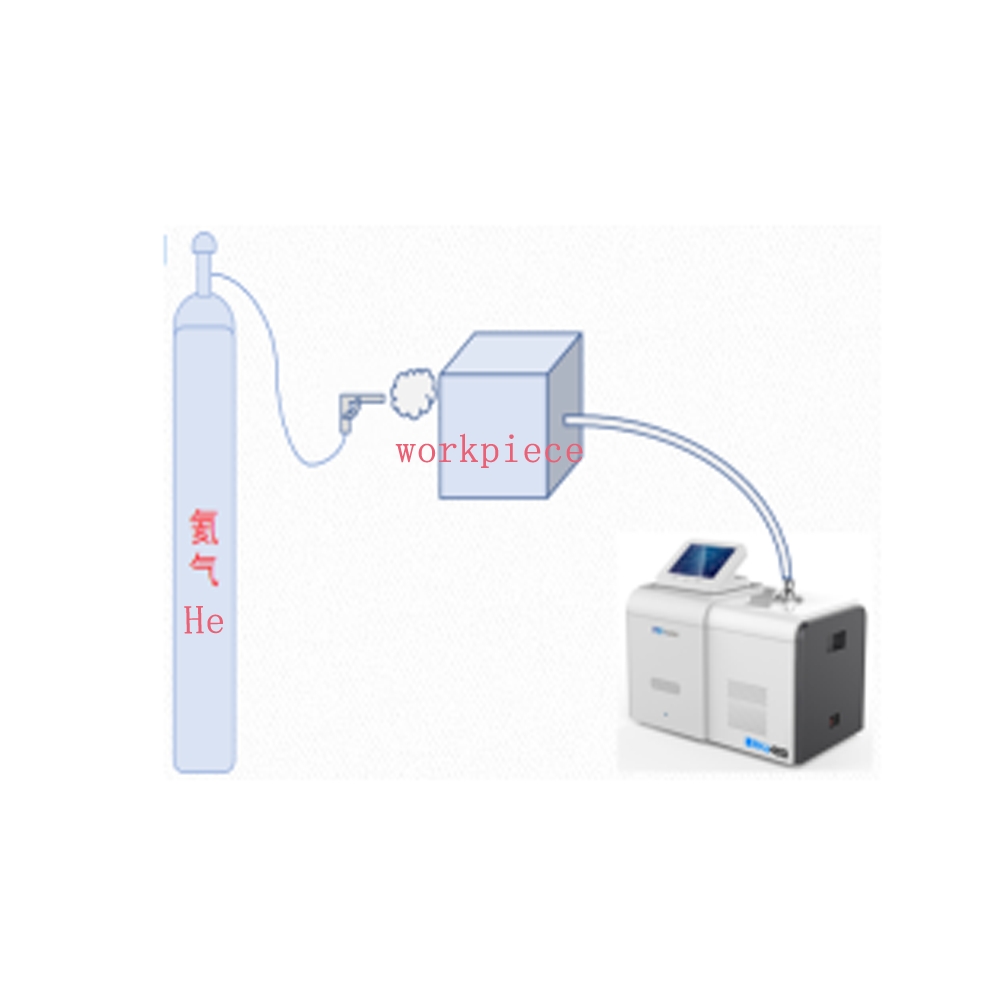
Helium injection method, also known as the injection method, is the most commonly used and most convenient leak detection method. Generally used to detect relatively small parts, the tested device and the instrument are connected, after pumping a good vacuum, helium is sprayed with a spray gun in the place where the tested device may have leakage holes (such as sealed joints, welds, eccetera.)
If there is a leak hole in the device under test, when helium is sprayed into the leak hole, helium will be immediately sucked into the vacuum system, thus diffusing into the mass spectrometer room, and the output of the helium mass spectrometer will respond immediately. Using this method, it should be noted that helium is a light inert gas and will rise automatically after ejected. In order to accurately spray helium at the leak hole position, helium should be sprayed from top to bottom, from near to far. Relative to leak detector position), this is because helium may be sucked into the upper leak hole when the injection is below, so it is difficult to determine the location of the leak hole; Inoltre, the distance between the leak hole and the mass spectrometer room is also different, so the helium injection should start from the side near the leak detector and be carried out from near to far.
Helium mass spectrometry leak detector ammonia spray leak detection process:
1. After assembling the workpiece, use the corresponding tooling to connect the workpiece to the leak detector.
2. After confirming that the connection is OK, press the “Start” button of the leak detector, and the leak detector will enter the evacuated leak detection state.
3. Observe that the background value displayed on the leak detector screen reaches 4.0×10⁻¹⁰Pa.m3/s.
4. Utilizzo 99.99% O 999% ammonia gas to detect the suspected leakage point of the workpiece.
5. For each suspected leak point, spray ammonia for 1 second and observe the background value of the leak detector for 3-5 secondi. Observe whether the background value of the leak detector is increased or whether the leak detector has alarm output.
6. Follow Step 5 to check other suspicious leakage points.
7. The detection sequence of ammonia injection is from top to bottom, first confirm the large leak point, 8. After the detection is finished, press the “stop button” of the leak detector, and then remove the workpiece when the standby screen of the leak detector display appears.
