


XRY-II Heat Storage Coefficient Apparatus
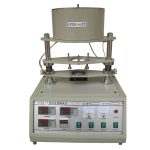

- Beschreibung
- Anfrage
Beschreibung
XRY-II Heat Storage Coefficient Apparatus
Überblick
The instrument can measure the heat storage coefficient, thermal conductivity, temperature conductivity and specific heat of materials in different wet states at the same time in a test, the device is simple, hohe Genauigkeit, and the test speed is fast (about ten minutes for a test). JGJT 12-2019 (instead of JGJ 51-2002) (Technical Specification for lightweight Aggregate Concrete) and Appendix B of JG/T283-2010 “Expansive Vitrified microbead Light Mortar” for determination of heat storage coefficient.
The main technical performance
1. Anwendungsbereich:
This instrument is suitable for measuring the thermal conductivity, heat storage coefficient, temperature conductivity and specific heat of the homogeneous plate, colloidal, powder and granular materials under dry or different moisture conditions. The heat storage coefficient of the measured material ranges from 0.1-30W/M2K, and the thermal conductivity of the measured material ranges from 0.035 to 1.7w/m.k.
2, Probengröße: a thin specimen 20×20× (1.5 ~ 3) cm
Two thick specimens 20×20× (4 ~ 10) cm
3, power source ~ 220V, 50HZ
4, Gesamtgröße (Länge × Breite × Höhe) 600×440×600 (mm)
5. Arbeitsbedingungen
① Ambient temperature 10 ~ 35℃ ② Relative humidity ≤80%
③ The room temperature should be stable ≤±1.5℃
6, the accuracy of the measurement results is ±5%
7. Connect the host computer to realize automatic computer testing and data printing output.
Basic principles
Based on the principle of unstable thermal conductivity, the instrument is heated in the experimental material for a short time to make the temperature of the experimental material change. According to the characteristics of the change, the thermal storage coefficient, thermal conductivity coefficient, temperature conductivity coefficient and specific heat of the test material can be calculated by solving the differential equation of thermal conductivity.


