
ASTM D257: The Core Technical Standard for Resistance Testing of Insulating Materials
1. Standard Positioning and Scope of Application
ASTM D257 is a standard for DC resistance and resistivity testing of insulating materials developed by ASTM International, with its full name being Standard Test Methods for DC Resistance or Conductance of Insulating Materials. As a fundamental standard for evaluating the electrical properties of insulating materials, it provides a unified technical basis for material research and development, product quality control, and engineering application selection, and is widely used in fields such as electronics and electrical engineering, aerospace, and building materials.
Its scope of application covers various types of insulating materials, including solid insulating materials (e.g., plastics, rubber, ceramics, insulating paper, and insulating paint films), liquid insulating materials (e.g., transformer oil and capacitor oil), and gaseous insulating materials (e.g., sulfur hexafluoride and dry air). The measurable resistance types include volume resistance (resistance inside the material) and surface resistance (resistance on the material surface), which can meet the needs of evaluating material insulation performance in different scenarios, such as insulation testing of electronic component enclosures, performance verification of cable insulation layers, and antistatic performance testing of building thermal insulation materials. However, it should be noted that this standard is not applicable to semiconductor materials (resistivity < 10^6 Ω·cm) or breakdown voltage testing of high-voltage insulating materials (the latter should refer to standards such as ASTM D149).
2. Analysis of the Core Technical System
(1) Testing Principle
ASTM D257 conducts tests based on Ohm’s Law for DC circuits: Under specified temperature and humidity conditions, a constant DC voltage is applied to the sample. After the current in the circuit stabilizes (usually requiring a certain polarization time to eliminate the capacitance effect of the material), the current passing through the sample is measured. Then, the resistance of the sample is calculated according to Ohm’s Law (R = U/I, where R is resistance, U is the applied voltage, and I is the stable current). If resistivity (a physical quantity representing the insulation performance of the material itself, independent of sample size) needs to be obtained, conversion based on the geometric dimensions of the sample is required: Volume resistivity (ρ_v) = R_v × A / d (R_v is volume resistance, A is the electrode contact area, and d is the sample thickness); Surface resistivity (ρ_s) = R_s × L / b (R_s is surface resistance, L is the distance between electrodes, and b is the electrode length).
(2) Requirements for Instruments and Materials
1.Core Instruments:
a.High Resistance Meter (Insulation Resistance Tester): The measurement range should cover 10^6 ~ 10^19 Ω, with an accuracy of ±5% of the full scale. It should have a voltage adjustment function (capable of outputting different levels of DC voltage such as 10V, 50V, 100V, 250V, 500V, and 1000V). Some high-precision high resistance meters also need to be equipped with a current amplification module to detect weak currents (the minimum detectable current can reach 10^-16 A).
b.Electrode System: A three-electrode system is commonly used for solid material testing (the diameter of the main electrode is usually 25mm ~ 50mm, and the width of the guard electrode is 5mm ~ 10mm). A cylindrical electrode cell is used for liquid material testing (the electrode material is platinum or stainless steel, and the cell constant needs to be calibrated in advance). A sealed parallel plate electrode is used for gaseous material testing (the adjustable range of electrode spacing is 1mm ~ 100mm).
c.Environmental Control Equipment: A constant temperature and humidity chamber (temperature control accuracy: ±0.5℃, humidity control accuracy: ±2%) is used to simulate test scenarios under different environmental conditions. A vacuum drying oven is used for degassing liquid materials and drying samples.
2.Auxiliary Materials and Sample Requirements:
a.Samples: Solid samples should be flat, free of bubbles and scratches, with uniform thickness (deviation ≤ 5%), and their size should match the electrodes (e.g., the diameter of a circular sample should be at least 10mm larger than that of the guard electrode). Liquid samples should be clear and free of impurities, and air should be avoided during sampling. Gaseous samples should have a purity of ≥99.9% and a water content of ≤50ppm.
b.Cleaning Materials: Anhydrous ethanol and isopropyl alcohol are used to clean oil stains and dust on the electrode surface and sample surface. Absorbent cotton and lint-free cloth are used to avoid residual fibers affecting the test during cleaning.
c.Electrode Contact Medium: For solid samples with uneven surfaces, conductive paste (e.g., silver conductive paste with a volume resistivity < 10^-4 Ω·cm) can be used to fill the gap between the electrode and the sample to reduce contact resistance. However, it should be noted that the conductive paste must not penetrate into the sample, so as not to affect the volume resistance test results.
3. Result Interpretation and Evaluation Rules
(1) Calculation of Resistance and Resistivity
1.Volume Resistance (R_v): The stable resistance value after applying the specified voltage is directly read by the high resistance meter, with the unit of Ω (usually expressed as 10^n Ω, e.g., 10^12 Ω).
2.Surface Resistance (R_s): It is also read by the high resistance meter, with the unit of Ω. For materials with excellent insulation performance, the surface resistance is usually greater than 10^12 Ω.
3.Volume Resistivity (ρ_v): It is calculated according to the formula ρ_v = R_v × A / d, where A is the effective contact area of the electrode (unit: cm²), d is the sample thickness (unit: cm), and the unit is Ω·cm (usually expressed as 10^n Ω·cm, e.g., 10^14 Ω·cm).
4.Surface Resistivity (ρ_s): It is calculated according to the formula ρ_s = R_s × L / b, where L is the distance between the main electrode and the guard electrode (unit: cm), b is the length of the main electrode (unit: cm), and the unit is Ω (since the geometric factor of surface resistivity is dimensionless, the unit is the same as that of resistance, but the physical meaning is different).
(2) Determination of Result Validity and Grade Classification
1.Validity Determination:
a.If the current fluctuates continuously during the test (the fluctuation range exceeds 10% within 10 minutes), or the sample breaks down or heats up (temperature rise exceeds 5℃) after applying the voltage, the test result is invalid, and the sample should be re-prepared and the instrument status checked.
b.At least 5 parallel samples should be tested for each batch of samples. If the coefficient of variation of resistivity among parallel samples is ≤15%, the arithmetic mean is taken as the final result. If the coefficient of variation is >15%, the cause (e.g., uneven samples, poor electrode contact) should be analyzed, and 5 more parallel samples should be tested.
2.Insulation Performance Grade Classification (Refer to Industrial Practice):
a.High Insulation Materials: Volume resistivity ≥10^14 Ω·cm, surface resistivity ≥10^13 Ω (e.g., polytetrafluoroethylene, epoxy resin).
b.Medium Insulation Materials: Volume resistivity 10^10 ~ 10^14 Ω·cm, surface resistivity 10^9 ~ 10^13 Ω (e.g., polyethylene, rubber).
c.Low Insulation Materials (Semi-Insulating Materials): Volume resistivity 10^6 ~ 10^10 Ω·cm, surface resistivity 10^6 ~ 10^9 Ω (e.g., some modified plastics, conductive filled composites).
4. Practical Value and Application Precautions
(1) Core Value
1.Material Research and Development and Selection: In the stage of new material research and development, ASTM D257 testing can quickly evaluate the impact of different formulations (e.g., adding flame retardants and antioxidants) on the insulation performance of materials, providing data support for formula optimization. In engineering applications, materials that meet insulation requirements can be selected based on the test results of this standard. For example, the enclosure of electronic equipment should be made of materials with a volume resistivity ≥10^14 Ω·cm to ensure electrical safety.
2.Product Quality Control: During the production process, regular ASTM D257 testing of insulating material products (e.g., cable insulation layers, insulating paint films) can timely detect product quality fluctuations (e.g., excessive impurities in raw materials, deviations in production process parameters leading to decreased insulation performance), preventing unqualified products from entering the market.
3.Aging and Reliability Evaluation: By simulating aging environments such as high temperature, high humidity, and ultraviolet radiation, combined with ASTM D257 testing, the change trend of resistivity of insulating materials during service can be monitored, and the aging rate and service life of materials can be determined. For example, the attenuation of insulation performance of transformer oil after long-term use can be evaluated, providing a basis for the replacement cycle.
(2) Key Precautions
1.Control of Environmental Factors: Temperature and humidity have a significant impact on the resistance of insulating materials. An increase in temperature will intensify the molecular movement inside the material, increase the carrier concentration, and lead to a decrease in resistivity (usually, the volume resistivity decreases by 1-2 orders of magnitude for every 10℃ increase in temperature). An increase in humidity will form a water film on the material surface, increase the surface leakage current, and significantly reduce the surface resistance. Therefore, the test must be conducted in a specified constant temperature and humidity environment, and the sample must be fully balanced with the environmental humidity before testing.
2.Electrode Contact Issues: The contact state between the electrode and the sample directly affects the test results. If the contact is not tight (e.g., uneven sample surface, insufficient electrode pressure), a large contact resistance will be generated, leading to a higher measured volume resistance. If too much conductive paste is used and penetrates into the sample, the volume resistance will be lower. During testing, it is necessary to ensure uniform electrode pressure (usually 0.1 ~ 0.5 MPa), and the amount of conductive paste should be just enough to fill the gap.
3.Selection of Polarization Time: Insulating materials have certain dielectric properties. After applying DC voltage, polarization current (including displacement current and absorption current) will be generated. It is necessary to wait for the polarization current to decay to a stable state (usually waiting for 1 minute, 5 minutes, and 10 minutes, and recording the resistance values at different time points. If the difference between the resistance value at 10 minutes and that at 5 minutes is ≤5%, the current is considered stable). Otherwise, the read resistance value will be lower (because the polarization current is not completely eliminated, and the total current is larger).
4.Sample Processing Details: Solid samples should be slightly polished with sandpaper (P400 ~ P800) to remove the oxide layer and impurities, but excessive polishing should be avoided to prevent uneven thickness. Liquid samples should be degassed in a vacuum drying oven (vacuum degree ≤10 Pa, temperature 50±5℃, time 2 hours) before testing to avoid the impact of bubbles on current conduction. Gaseous samples should be passed into the test chamber for replacement 3 times first to ensure that the purity of the gas in the chamber meets the requirements.
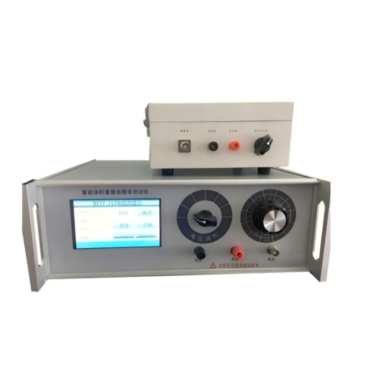
Our product GA-3802 Volume Resistivity Tester meets ASTM D257 standard
GA-3802 Volume Resistivity Tester
Overview
This instrument for my company 121 upgraded products improved before the instrument can only calculate the resistance need to manually convert the resistivity combined with user feedback requirements simple measurement, especially in the resistance measurement only need to artificially put the sample without conversion results of automatic calculation, sample can be selected and solid, powder, liquid.Three kinds of products can be automatically converted to resistivity products using color 64 bit true color screen display support touch screen selected sample.
Screen display: material resistance current voltage resistivity.This instrument has high precision, rapid display, good stability, easy reading, suitable for rubber, plastic, film, and powder, liquid, and a variety of insulating materials volume and surface resistance, resistivity measurement.
Main characteristics
Resistance measurement range wide 1×10⁴Ω ~ 1×10¹⁸ dot (14 power above the need to be calculated by current and voltage)
Current measurement range is 2×10⁻⁴A ~ 1×10-16A
Small size, light weight, high accuracy
Resistance, current and resistivity are displayed at the same time and are displayed on a large color screen
Direct display resistance and resistivity without conversion only input style thickness can be automatically calculated by the instrument resistivity.
All test voltage (10 v / 50 v / 100/250/500/1000 v) resistance and resistivity testing results direct reading, removed from the old high resistance meter under different test voltage or different range should be multiplied by the coefficient such as difficult to use.Not only can measure the ultra-high resistance can measure the micro current can also measure the resistivity directly.
https://www.gonoava.com/product/best-212-volume-resistivity-tester/
Email: [email protected]
WhatsApp: 0086 18670728798(We chat)
If you have any questions you can send me a message or email.