

GA-G108 Submersible Pump Comprehensive Performance Testing System


نموذج:GA-G108
- وصف
- سؤال
وصف
GA-G108 Submersible Pump Comprehensive Performance Testing System
أنا. ملخص
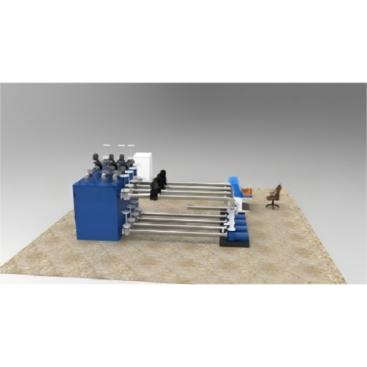
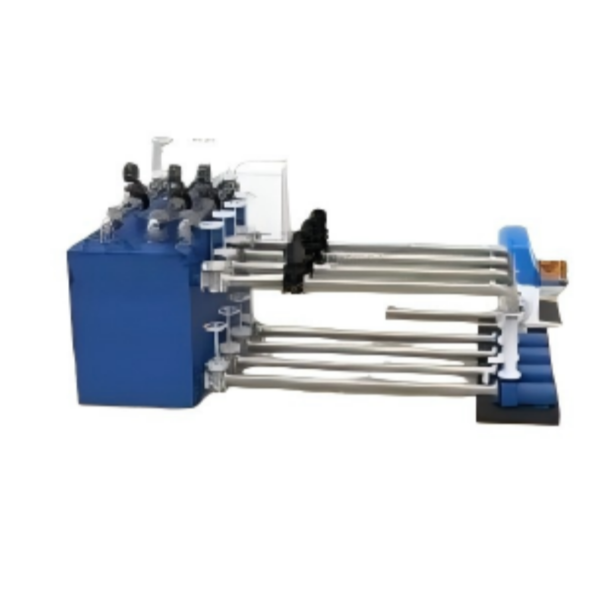
The submersible pump test bench is a hardware and software system primarily used for factory and type testing of submersible pumps. The testing system consists of a flow rate and speed tester, a pressure and head tester, a single/three-phase electrical parameter measuring instrument, a live winding temperature rise tester, and flow sensors, pressure transmitters, pressure gauges, إلخ.
GA-G108 Submersible Pump Comprehensive Performance Testing System
II. Test Items:
Flow rate, ضغط (head), speed, voltage, حاضِر, power, efficiency, temperature rise, إلخ.
GA-G108 Submersible Pump Comprehensive Performance Testing System
III. Test Functions:
No-load test, load/performance test, cavitation test, temperature rise test, locked rotor test, noise test, vibration test, leakage test
GA-G108 Submersible Pump Comprehensive Performance Testing System
IV. التطبيقات:
Submersible pumps, deep well pumps, centrifugal pumps, pipeline pumps, self-priming pumps, chemical pumps, screw pumps, household booster pumps, sewage pumps, mixed-flow pumps, axial-flow pumps, vortex pumps, automotive washing pumps, automotive circulation pumps, automotive cooling pumps, إلخ.
GA-G108 Submersible Pump Comprehensive Performance Testing System
الخامس. Software Introduction
1. Testing Methods:
• Electrical measurement method for measuring unit efficiency
• Direct measurement method for measuring pump efficiency
• Calculating efficiency from motor curves
2. Rich Parameter Setting Functions:
1) Product Design Parameters: Including settings for design point flow rate, design point head, design point efficiency, maximum flow rate point flow rate, maximum flow rate point head, maximum flow rate point efficiency, minimum flow rate point flow rate, minimum flow rate point head, minimum flow rate point efficiency, ideal point flow rate, positive displacement pump full pressure, rated speed, speed transmission ratio, and cavitation margin parameters.
2) State Parameter Settings: Including settings for inlet pipe diameter, outlet pipe diameter, inlet gauge position difference, outlet gauge position difference, atmospheric pressure, room temperature, number of pump stages, and sampling times.
3) Test Method Settings:
• Flow sensor selection: (Electromagnetic flow meter, vortex flow meter, orifice plate differential pressure meter), range, turbine coefficient, orifice plate coefficient.
• Pressure sensor selection: (Differential pressure gauge as positive and negative gauge, differential pressure sensor, outlet pressure sensor, outlet pressure gauge as positive and negative gauge, differential pressure gauge as positive and negative gauge), inlet pressure range, outlet pressure range. • Power testing methods: (Electrical measurement method, Torque method), (Single-phase motor, Three-phase motor), Current multiplier, Motor curve, Sensor calibration temperature.
• Speed testing methods: (Automatic measurement, Manual measurement)
3. User-friendly test operation interface: Including buttons for parameter display, stop, أخذ العينات, insert sampling, resampling, delete, calculation, data display, motor power calculation, معالجة البيانات, إلخ.
4. Data processing interface: Basic information settings include manufacturing unit, report number, test time, pump model, pump number, room temperature, water temperature, atmospheric pressure, gauge difference, inlet pipe diameter, outlet pipe diameter, نطاق الضغط, current multiplier, rated power, rated speed, flow meter coefficient, إلخ.
5. Test bench error analysis function: Including average value, percentage error (%), random error (%), systematic error (%), and total error (%).
6. Enter the “Curve Fitting” وظيفة
• Curve type: Performance curve, cavitation curve, two curves.
• Discrimination type: Crosshair discrimination, no discrimination, إلخ.
• Level: (مستوى 1, مستوى 2, Custom, Class B, Class C).
• Open and import data to be fitted.
• Open data files, which can be searched by product number, product model, and test date.
7. Perform curve fitting on the exported data and plot the pump performance curve (H-Q, H-Q, P-Q) or cavitation curve (NASH-Q).
8. Print curve report, accuracy analysis report, and print English curves.
9. Plot current curves and comparison graphs.